Accounting for Oklahoma Cannabis Manufacturers & Processors
Cannabis Manufacturing Accounting in Oklahoma
Manufacturing complicates accounting. Raw materials, production labor, packaging, work in process, conversions and finished goods all move before a single unit is sold. Accounting built for production gives Oklahoma manufacturers and processors real product-cost visibility, supported inventory and COGS, SKU-level margin detail, usable financial reporting and a clearer view of cash.
- Product cost
- Built from real runs
- Inventory
- Raw, WIP, finished
- Labor
- Coded by function
- Margins
- Visible by SKU
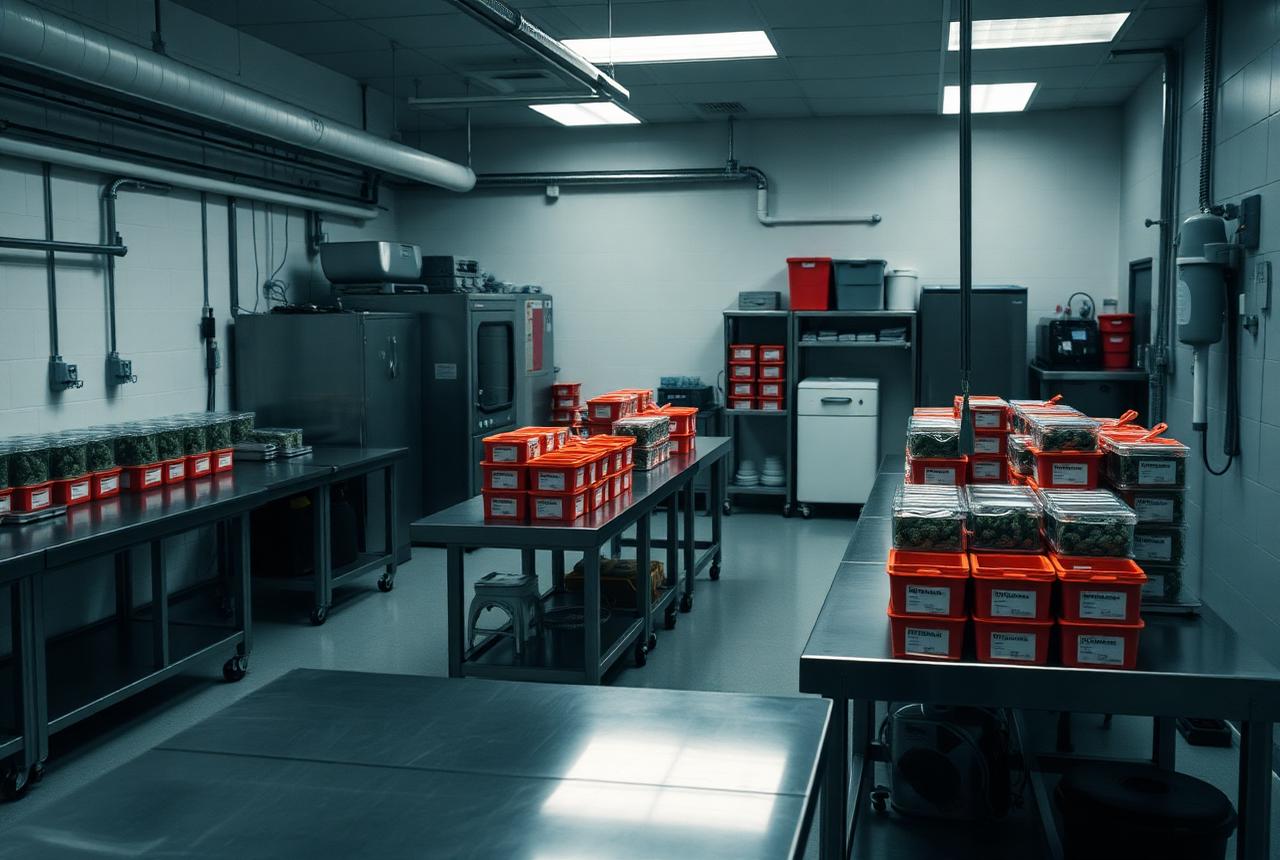
Cannabis Manufacturing Accounting for Oklahoma Businesses
Manufacturing accounting differs from ordinary service-business bookkeeping because a manufacturer produces physical goods. A service firm bills time and records the related costs in the same period. A cannabis manufacturer buys or receives input material, pays production labor, consumes supplies and packaging, runs equipment in a facility that carries its own costs, and produces finished units that may sit in inventory for weeks before a sale occurs. Those costs have to be captured and related to the production they belong to, or the financial statements will show expense and revenue landing in unrelated periods.
The accounting also has to follow the physical reality of the operation. Material enters as raw inventory, moves into work in process as production begins, becomes finished goods when a run completes, and leaves inventory through sales, transfers or waste. Batch production, conversions between units of measure, yield variation and production loss all change the cost carried by whatever product survives.
- Raw materials and production inputs received and consumed
- Work in process while production runs are still open
- Finished goods available for sale or transfer
- Direct production labor and packaging labor
- Production overhead and facility-related costs
- Packaging, labels, containers and secondary packaging
- Production equipment, its cost and its ongoing maintenance
- Batch production records tied to cost accumulation
- Waste, production loss and inventory adjustments
- Yield relative to inputs consumed, and cost of goods sold
How any specific cost is classified for accounting or tax purposes depends on applicable standards, applicable tax rules and the facts of the business. This page describes the mechanics of the work rather than prescribing a treatment for every cost.
Accounting for Cannabis Processors
Processor accounting has to reflect how product actually moves through production. A processor receives input material, takes it through one or more production stages, converts it into an intermediate or bulk form, packages it into saleable units and transfers or sells the result. Each of those steps changes quantities, units of measure and the cost attached to what remains.
When the accounting ignores those stages and simply expenses purchases as they occur, the books stop describing the business. Inventory is understated or overstated, cost of goods sold jumps around, and product margins cannot be explained. Processor accounting closes that gap by mirroring production in the financial records.
- Input materials received, valued and recorded as inventory
- Production stages that consume inputs and add cost
- Conversions between bulk, intermediate and finished forms
- Production and packaging labor associated with runs
- Packaging materials consumed at the point of packaging
- Waste and loss recorded and reconciled rather than ignored
- Finished goods added to inventory at supported quantities
- Transfers to affiliated entities, retail locations or wholesale buyers
- Cost of goods sold derived from real inventory movement
- Product-level margins that management can actually interpret
Broader context on processors as a business type lives on the cannabis processors industry page, and on the cannabis manufacturers industry page. This page covers the accounting service itself.
Cannabis Manufacturing Cost Accounting
Cost accounting is the core of manufacturing accounting. It identifies the costs associated with production, organizes them consistently, and relates them to output so management can compare production periods on a like-for-like basis. Without it, financial statements report totals that no one can trace back to an operational cause.
Cost categories a production business may need to capture and organize include:
- Raw materials and input product
- Ingredients and additives used in production
- Direct production labor
- Packaging materials, labels and containers
- Testing costs where applicable to the operation
- Production supplies and consumables
- Utilities associated with production activity
- Facility-related costs such as rent, repairs and maintenance
- Equipment-related costs including maintenance and depreciation
- Other costs incurred in connection with production
Broader inventory valuation methodology and cost accounting technique across business types is covered on the inventory and cost accounting page. Here the focus is manufacturing and processing specifically.
Want to Know What Your Products Actually Cost?
If product costs, work in process or COGS are unclear, a review of your production and accounting records is the fastest way to see where the numbers break down.
Cannabis Product Costing
Product costing answers a question most operators cannot answer confidently: what does it actually cost us to produce one unit of this product? Selling price is known. Product cost frequently is not, and without it, every margin conversation is guesswork.
- Raw material and input cost consumed by the run
- Production labor hours applied to the run
- Packaging materials used per finished unit
- Production time and throughput of the equipment used
- Yield achieved from the inputs consumed
- Waste and rejected output from the run
- Testing costs where applicable to the product
- Facility costs associated with production activity
- Equipment cost and maintenance attributable to production
- Batch size and total production volume over the period
- 01Inputs consumed by a production run are identified and valued
- 02Production labor and packaging applied to the run are captured
- 03Other production costs associated with the run are accumulated
- 04Output quantity actually produced is recorded
- 05Waste and loss are recorded against the run
- 06Cost per finished unit is derived from accumulated cost and real output
Weak costing makes product-level margins misleading. If input costs are booked as period expenses, if packaging is buried in a general supplies account, or if labor is never separated by function, reported margins reflect bookkeeping structure rather than production economics.
Cannabis SKU Profitability
SKU profitability compares what each product sells for against what it costs to produce. High-revenue products are not automatically the most profitable ones. A SKU with heavy packaging, low yield, high labor content or frequent discounting can carry a thinner margin than a lower-revenue product that runs efficiently.
Selling price and discounting
Realized price after discounts, promotions and wholesale terms, not list price.
Product cost
Materials, production labor, packaging and other production costs attributable to the unit.
Gross margin by SKU
Margin calculated on a consistent basis so products can be compared to each other.
Packaging load
Packaging and labeling cost per unit, which varies widely across product formats.
Labor content
Products requiring more hands-on production time carry more labor cost per unit.
Yield and waste
Runs that lose more to waste raise the cost carried by every surviving unit.
Product mix
Overall margin depends on which SKUs make up volume, not just individual product margins.
Volume effects
Fixed production costs spread differently across large and small runs.
SKU-level reporting is only as good as the costing behind it. When product costs are supported, discontinuing, repricing and product-mix decisions rest on numbers rather than instinct.
Raw Materials Accounting
Raw materials accounting tracks input product and production supplies from purchase through consumption. It is the first place manufacturing books tend to break, because purchases are easy to record and consumption is easy to omit.
- Purchases recorded with vendor invoices and terms
- Receiving records confirming what actually arrived
- Vendor invoices matched to receipts and to payments
- Inventory additions recorded at supported amounts
- Consumption recorded as material moves into production
- Transfers between locations, facilities or entities
- Adjustments for count differences and unit-of-measure issues
- Waste and spoilage recorded against the correct period
- Ending raw material inventory supported by counts
Raw material records should reconcile with both the operational systems that track physical product and the accounting records that carry its value. When the two disagree, the difference should be traced rather than plugged.
Work-in-Process Accounting for Cannabis Manufacturing
Manufacturing businesses routinely incur production costs before inventory becomes finished goods. At any period end, some runs are open: material has been consumed, labor has been applied, and the output is not yet packaged or saleable. Work-in-process accounting recognizes that reality instead of pretending production is instantaneous.
- 01A production run opens and consumes raw materials
- 02Production labor and other production costs are applied
- 03The run passes through its production stages
- 04Packaging is applied as units are completed
- 05Completed output transfers into finished goods
- 06Open runs remain in work in process at period end
There is no single universal WIP methodology. A short, high-volume packaging operation and a multi-stage conversion process require different approaches, and the treatment applied for financial reporting is not automatically the treatment applied for tax. What matters practically is that the method chosen is consistent, documented and supported by production records.
Finished Goods Inventory Accounting
Finished goods inventory covers completed products available for sale or transfer. Quantities and values should trace back to the production activity that created them, and every movement out of finished goods should have a recorded cause.
- Completed products added to inventory at supported quantities
- Inventory valuation applied consistently across products
- Transfers to retail locations, affiliates or wholesale buyers
- Sales that reduce inventory and generate cost of goods sold
- Adjustments for count differences and reclassifications
- Damaged, expired or destroyed product removed and documented
- Ending finished goods inventory supported by physical counts
Finished goods that cannot be traced back to production activity are a reporting problem waiting to surface. If the books show inventory that production never produced — or omit output that production clearly created — cost of goods sold and gross margin are both wrong.
Cannabis Production Conversions
Cannabis manufacturing involves converting inventory from one state into another. Raw material becomes manufactured product. Bulk product becomes packaged units. Intermediate goods become finished goods. Each conversion changes quantity, often changes unit of measure, and always changes where cost sits.
- Raw materials converted into manufactured product
- Bulk output converted into packaged retail units
- Intermediate goods converted into finished goods
- Repackaging or relabeling of existing finished inventory
- Rework of product that did not meet specification
Conversions create accounting discrepancies when operational systems and financial records use different quantities, different units or different timing. A conversion recorded in the tracking system on one date and in accounting on another produces a period-end difference that looks like missing inventory. Aligning units of measure and cutoff between the two systems removes most of that noise.
Cannabis Manufacturing COGS Accounting
Cost of goods sold for a manufacturer flows from inventory movement, not from a spreadsheet estimate. Conceptually it reflects beginning inventory plus costs added during the period, less ending inventory, with production activity determining how cost accumulates and transfers along the way.
- Beginning inventory across raw materials, WIP and finished goods
- Purchases of input materials and packaging during the period
- Production activity and the costs accumulated against it
- Transfers of completed output into finished goods
- Ending inventory supported by counts and production records
- Cost of goods sold derived from that movement
Unreliable production and inventory records distort COGS and gross margin directly. If ending inventory is unsupported, COGS absorbs the error, and margin swings from month to month for reasons unrelated to operations. The remedy is supported inventory balances and consistent cost accumulation, not adjusting entries at year end.
Production Labor Accounting
Labor is often the second largest cost in a manufacturing operation after materials, and it is frequently the least visible. Payroll posted to a single expense account tells management nothing about production economics.
- Direct production labor applied to runs and batches
- Packaging labor, which often behaves differently from production labor
- Production supervision and quality oversight
- Administrative and sales payroll kept separate from production
- Department or function coding in the payroll and accounting systems
- Time tracking where the operation and systems make it practical
- Labor-cost analysis relative to output and product mix
Labor classification should be supported by actual records rather than assumption. Payroll processing and the accounting behind it are covered on the cannabis payroll page.
Packaging Cost Accounting
Packaging is easy to underestimate and easy to lose in a general supplies account. For multi-SKU operators it can materially affect unit economics, because two products with similar production costs can carry very different packaging loads.
- Primary packaging in direct contact with product
- Secondary packaging such as cartons and outer boxes
- Labels, inserts and compliance printing
- Containers, jars, tubes and closures
- Shipping and case packaging where applicable
- Packaging labor associated with applying it
- Packaging waste and rework of mislabeled units
Visibility here means knowing packaging cost per finished unit rather than a monthly lump sum. Whether specific packaging costs are inventoried, expensed or capitalized depends on applicable accounting and tax rules and the facts of the business.
Cannabis Manufacturing Yield and Waste Analysis
Yield analysis compares what went into production against what came out. It is one of the few operational metrics that translates directly into financial results, because the same input cost spread across fewer finished units raises cost per unit and compresses margin.
- Input quantity consumed by a run
- Output quantity actually produced
- Yield expressed consistently across comparable runs
- Waste and production loss recorded against the run
- Rework where product is reprocessed rather than discarded
- Batch-level performance compared over time
- Cost per finished unit as yield changes
Expected yield varies by process, equipment, input quality and product. This page does not publish yield benchmarks, because a number that fits one operation misleads another. What matters is measuring your own yield consistently and understanding what it does to product cost.
Cannabis Waste and Inventory Adjustments
Adjustments are unavoidable in a production business. What separates clean books from unreliable ones is whether adjustments are documented and reconciled or simply entered to make a balance agree.
- Production loss occurring during normal manufacturing
- Damaged product removed from saleable inventory
- Destroyed product recorded and documented
- Packaging loss including mislabeled or damaged materials
- Inventory adjustments arising from physical counts
- Count differences investigated before they are booked
- Unit-of-measure issues that create apparent discrepancies
Recurring unexplained adjustments usually indicate a process problem upstream rather than a counting problem. Tracing a few of them to their source generally reveals the cause.
Seed-to-Sale Reconciliation for Cannabis Manufacturers
Manufacturers run two parallel records of the same activity: the seed-to-sale tracking system records physical packages, conversions, transfers and waste, while accounting records the financial value of that movement. Reconciliation confirms the two agree.
- Seed-to-sale package and conversion records
- Production and batch records maintained on the floor
- Inventory records across raw materials, WIP and finished goods
- Accounting inventory balances in the general ledger
- Physical count results at period end
- Differences traced to timing, units, omissions or costing errors
Reconciliation as a standalone engagement, including recurring monthly reconciliation and historical cleanup, is covered on the METRC reconciliation page. This section covers how that reconciliation feeds manufacturing cost accounting.
POS, Sales and Manufacturing Accounting
Where a manufacturer sells finished goods — wholesale to other licensees, or through affiliated retail in a vertically integrated group — those sales should connect cleanly to the accounting records.
- Finished goods reduced from inventory as units are sold
- Revenue recorded consistently with the sale
- Cost of goods sold recognized against the same activity
- Customer invoices and wholesale terms recorded and tracked
- Reports from POS, ERP or order systems reconciled to the ledger
- Transfers to affiliated retail recorded so cost stays traceable
How that connection is built depends on the systems in use. This page does not claim prebuilt integrations with specific platforms; the work involves reconciling the reports those systems produce against the accounting records.
Physical Inventory and Manufacturing Accounting
Physical counts validate what the financial records assert. For a manufacturer that means counting across stages, not just counting finished product on a shelf.
- Raw materials and production inputs on hand
- Work in process for runs open at the count date
- Finished goods packaged and awaiting sale or transfer
- Cutoff procedures so production and shipments land in the right period
- Transfers in transit between locations at the count date
- Adjustments recorded and explained after the count
- Waste identified during the count and documented
Counts that never happen leave inventory balances that drift. Counts performed without cutoff discipline produce differences that look like shrinkage but are really timing.
Inventory and WIP Balances You Cannot Explain?
If raw materials, work in process or finished goods do not reconcile to production, a structured review can identify where the records diverged and what it takes to correct them.
Cannabis Manufacturing Bookkeeping
Manufacturing accounting only works on top of a clean bookkeeping foundation. Cost accounting cannot rescue books where transactions are missing, miscoded or unreconciled.
- Purchases recorded with vendor detail and supporting documents
- Vendor bills tracked with terms and payment status
- Payroll posted with department and function coding
- Inventory activity recorded as it occurs
- Equipment purchases recorded to fixed assets rather than expense
- Revenue recorded consistently across sales channels
- Bank and credit card accounts reconciled every month
- Journal entries documented and supportable
- Month-end close performed on a schedule
Ongoing bookkeeping and month-end close across cannabis business types is covered on the cannabis bookkeeping page.
Cannabis Manufacturing Financial Reporting
Reporting is where the accounting becomes useful. A manufacturer needs more than an income statement; it needs visibility into inventory, production costs and margins at a level that supports decisions.
Income statement
Revenue, cost of goods sold, gross profit and operating expenses presented consistently.
Balance sheet
Inventory by stage, fixed assets, payables and the rest of the financial position.
Cash flow
Where cash was consumed by production, inventory, payroll and equipment.
Inventory schedules
Raw materials, work in process and finished goods detail supporting the balance sheet.
COGS and gross margin
Cost of goods sold with enough detail to explain margin movement.
SKU profitability
Product-level revenue and cost so mix and pricing decisions have support.
Production-cost analysis
Cost by category and by run, compared across periods.
Budget vs. actual
Planned production, cost and volume measured against what actually happened.
Management reporting design and recurring reporting packages are covered on the financial reporting page.
Cannabis Manufacturing Cash Flow Planning
Manufacturing consumes cash before it generates any. Input material is purchased, labor is paid, packaging is bought, testing is performed where applicable, and the resulting inventory may sit for weeks before it sells and longer before a wholesale customer pays.
- 01Cash spent on raw materials and production supplies
- 02Cash spent on production and packaging labor
- 03Cash spent on packaging, testing and facility costs
- 04Production time passes while cost sits in inventory
- 05Finished goods held until sold or transferred
- 06Sale occurs and receivables are created
- 07Cash returns when the customer pays
Equipment purchases add a second cash demand that does not follow the production cycle. Forecasting, working capital planning and scenario analysis are covered on the cash flow planning page.
Budgeting and Forecasting for Cannabis Manufacturers
A manufacturing budget starts with production volume, because nearly every other number depends on it. Expected sales drive planned output, planned output drives material and labor requirements, and those drive cash.
- Planned production volume by product and period
- Expected sales and pricing assumptions
- Raw material requirements and purchasing timing
- Production and packaging labor requirements
- Packaging and supplies consumption
- Inventory levels planned across stages
- Equipment purchases and maintenance
- Tax obligations and their timing
- Cash requirements across the production cycle
- Capital expenditures and how they will be funded
Broader forecasting, scenario modeling and senior financial support are covered on the fractional CFO page.
Cannabis Manufacturing Profitability Analysis
Profitability analysis for a manufacturer works at two levels at once: the individual product and the business overall. A business can carry healthy product margins and still lose money if overhead outpaces production volume, and it can show acceptable overall results while carrying products that lose money on every unit.
- Revenue by product, channel and period
- Product costs built from real production data
- Gross profit and gross margin measured consistently
- Production and packaging labor as a share of cost
- Yield and waste effects on unit cost
- Production overhead absorbed by volume
- Operating expenses below the gross margin line
- Inventory levels and the cash tied up in them
Profitability, margin and growth advisory more broadly is covered on the business advisory page.
Cannabis Manufacturing and IRC Section 280E
Federal cannabis scheduling and the application of IRC Section 280E are evolving areas that require analysis based on current law, the specific business, the products involved and the applicable tax period. Nothing on this page should be read as a conclusion about how any particular expense will be treated.
What is consistent across changes in the law is that documentation matters. Determinations about inventory, cost of goods sold and tax treatment rest on accounting records: production records that show what was made, inventory records that show what was on hand, payroll records that support labor classification, and cost records that show how amounts were accumulated. Manufacturers with accurate, well-supported accounting are in a better position under any interpretation than operators reconstructing figures after the fact.
Cannabis Manufacturing Tax Preparation
Year-round accounting makes tax preparation an exercise in reporting rather than reconstruction. When inventory, COGS and fixed assets are already supported, return preparation begins from records rather than from estimates assembled in a hurry.
- Inventory balances across raw materials, WIP and finished goods
- Cost of goods sold with supporting schedules
- Fixed-asset and depreciation records
- Payroll reports reconciled to the general ledger
- Revenue by channel reconciled to sales records
- Operating expenses coded consistently through the year
- Reconciliations supporting balance sheet accounts
Return preparation itself is covered on the cannabis tax preparation page.
Equipment Accounting for Cannabis Manufacturers
Manufacturing operations carry significant production assets, and those assets need records that survive scrutiny. Equipment expensed rather than recorded as an asset distorts both the balance sheet and reported results.
- Extraction and processing equipment where relevant to the operation
- Packaging and labeling equipment
- Production machinery and production lines
- HVAC and environmental control equipment
- Testing-related equipment where owned by the business
- Facility improvements associated with production space
- Technology, software and production systems
The recurring accounting questions are conceptual rather than mechanical: what the purchase price and associated costs were, what useful life is appropriate, how depreciation is recorded, whether a given expenditure is a repair or an improvement, and how planned purchases fit into capital planning. Capitalization decisions depend on applicable accounting standards, applicable tax rules and the facts of the purchase, so this page does not offer blanket rules.
Multi-Facility Cannabis Manufacturing Accounting
Operators running more than one production facility need both facility-level detail and consolidated financial statements. Rolling everything into one set of books hides which facility is performing.
- Facility-level accounting for revenue, cost and inventory
- Production costs tracked by the facility that incurred them
- Inventory transfers between facilities recorded so cost stays traceable
- Shared and corporate expenses allocated on a documented basis
- Labor tracked by facility and function
- Equipment and fixed assets recorded by location
- Consolidated reporting across all facilities
- Facility-level profitability compared on a consistent basis
Vertically Integrated Cannabis Accounting
Vertically integrated operators combine cultivation, manufacturing or processing, and retail. Product moves internally between those stages, and cost has to remain traceable as it does. Otherwise margin appears or disappears at internal transfer points rather than at real economic events.
- Cultivation output transferred into manufacturing as input material
- Manufacturing output transferred into retail as finished goods
- Internal transfers recorded consistently on both sides
- Inventory traceable across stages and entities
- Stage-level results reported alongside consolidated statements
- Seed-to-sale records reconciled across every stage
Related work sits on the cultivation accounting, dispensary accounting, inventory and cost accounting and METRC reconciliation pages.
Cannabis Manufacturing Accounting Cleanup
Many manufacturers arrive with books that no longer describe the business. Cleanup does not start with corrections; it starts with understanding what the existing records contain and where the divergence began.
- Inventory that does not reconcile to production or tracking records
- Work-in-process balances that cannot be supported
- Finished goods quantities that disagree with the books
- COGS that fluctuates without an operational explanation
- Raw material records that are incomplete or missing consumption
- Production labor that was never tracked by function
- Batch costs that cannot be reconstructed
- Seed-to-sale records and accounting that disagree
- Equipment and fixed-asset schedules that are incomplete
- Product margins that cannot be explained from the records
The work proceeds by tracing transactions back to source documents, identifying where the records diverged, and correcting entries in an order that leaves supportable financial statements rather than a series of plugs.
Common Cannabis Manufacturing Accounting Problems
These are illustrative issues manufacturers and processors describe when their accounting is not keeping up with production. They are examples of common situations, not client statements.
“We don’t know what each product actually costs us.”
Production costs are recorded in aggregate, so no product-level cost exists to compare against price.
“Our raw materials don’t reconcile.”
Purchases are recorded but consumption, transfers and waste are incomplete, so balances drift.
“Our WIP numbers aren’t reliable.”
Open runs at period end are estimated rather than built from production records.
“Finished goods don’t match the books.”
Physical inventory and the general ledger disagree and no one has traced the difference.
“COGS changes dramatically month to month.”
Unsupported ending inventory pushes the error into cost of goods sold every period.
“We don’t know which SKUs are profitable.”
Revenue by product exists, product cost does not, so margin by SKU cannot be produced.
“Labor and packaging aren’t allocated clearly.”
Payroll and packaging sit in general accounts with no function or product detail.
“Seed-to-sale and accounting don’t agree.”
The tracking system and the ledger tell different stories about the same inventory.
“Volume is up but margins aren’t improving.”
Without cost detail there is no way to see whether yield, labor, packaging or mix is absorbing the gain.
“Our equipment records are incomplete.”
Purchases were expensed or never scheduled, leaving fixed assets and depreciation unsupported.
Recognize Any of These in Your Own Books?
Most of these problems trace back to a small number of process gaps. A consultation reviews your production and accounting records and identifies which ones apply.
What We Review During a Manufacturing Accounting Engagement
Scope varies with the size of the operation and the condition of the records, but a manufacturing review generally looks at the following:
- General ledger and chart of accounts
- Financial statements for recent periods
- Bank and credit card statements and reconciliations
- Vendor invoices and purchasing records
- Payroll reports and department coding
- Inventory reports across raw materials, WIP and finished goods
- Seed-to-sale reports covering conversions, transfers and waste
- Production reports and run summaries
- Batch records maintained on the production floor
- Raw material receiving and consumption records
- Work-in-process schedules at period end
- Finished goods schedules and valuation support
- Physical count results and the adjustments that followed
- Equipment records and fixed-asset schedules
- COGS schedules and their supporting calculations
- Prior reconciliations and any known open items
Not every engagement requires all of it. The review is scoped to the issues the operation actually has.
Oklahoma Cannabis Manufacturing Accounting
Oklahoma cannabis manufacturers and processors operate production businesses with the full set of manufacturing accounting demands: input materials, production labor, packaging, conversions, inventory across stages, and product costs that determine whether the operation is making money. Many Oklahoma marijuana product manufacturers run lean teams where the person managing production is also the person answering accounting questions.
We work with Oklahoma cannabis production businesses of different shapes: standalone processors converting input material for other licensees, product manufacturers running multi-SKU lines, and vertically integrated operators combining cultivation, manufacturing and retail. Support is provided statewide, including operators in Oklahoma City, Tulsa, Norman, Broken Arrow, Edmond, Lawton and surrounding areas.
The work is accounting and financial management: bookkeeping, inventory and cost accounting, production costing, reconciliation, reporting and tax-ready records. It is not licensing consulting or regulatory representation.
Questions to Ask a Cannabis Manufacturing Accountant
These questions separate accountants who understand production from those who treat a manufacturer like any other small business.
- How do you account for raw materials from purchase through consumption?
- How do you handle work in process at period end?
- How do you calculate product costs for individual SKUs?
- How do you reconcile seed-to-sale data with the accounting records?
- How are production labor and packaging costs tracked and coded?
- How do you support the cost of goods sold figure on the financial statements?
- Can you help analyze SKU profitability and product mix?
- Can you clean up historical manufacturing books that no longer reconcile?
- How does manufacturing accounting interact with IRC Section 280E analysis?
- Can you support vertically integrated operators across multiple stages?
Cannabis Manufacturing Accounting FAQs
- What is cannabis manufacturing accounting?
- Cannabis manufacturing accounting is the accounting work built around a production business: recording raw material purchases and consumption, accumulating production labor, packaging and other production costs, tracking work in process and finished goods, reconciling inventory to production and seed-to-sale records, supporting cost of goods sold, and producing financial reporting that shows what products cost and what margins they generate.
- How is processor accounting different from ordinary bookkeeping?
- Ordinary bookkeeping records revenue and expenses as they occur. A processor buys or receives input material, converts it through one or more production stages, packages it, and only then sells finished units. Costs accumulate against inventory before any sale happens, quantities change units of measure along the way, and waste and yield affect the cost of everything that survives production. None of that arises in a straightforward service business.
- How should cannabis manufacturers account for inventory?
- Manufacturing inventory is generally tracked in stages: raw materials and inputs, work in process while production is underway, and finished goods available for sale or transfer. Balances in each stage should be supported by production records and counts rather than estimated. The specific valuation method and the costs included depend on the business, its production process, applicable accounting standards and applicable tax rules, so it is determined case by case.
- What is work-in-process accounting?
- Work-in-process accounting recognizes that production costs are incurred before inventory becomes a finished, saleable product. Materials, labor and other production costs accumulate against batches or production runs that are still in progress at period end. How that accumulation is measured and when costs transfer into finished goods depends on the production process and on the applicable accounting and tax rules, so there is no single universal method.
- How is cannabis product cost calculated?
- Conceptually, product cost gathers the costs attributable to producing a unit: input materials, production labor, packaging, and other production costs associated with the run, divided by the output the run actually produced. Yield and waste matter directly, because the same input cost spread over fewer finished units raises cost per unit. What is properly included is a facts-and-circumstances determination under applicable accounting and tax rules.
- How does manufacturing accounting affect COGS?
- Cost of goods sold reflects beginning inventory plus costs added during the period, less ending inventory. If raw material consumption, work in process, production labor or finished goods quantities are unreliable, ending inventory is unreliable, and COGS and gross margin move erratically month to month for reasons that have nothing to do with operations. Sound production and inventory records are what make COGS explainable.
- How should production labor be tracked?
- Posting all payroll to a single expense account removes any ability to analyze production economics. A more useful approach codes payroll by function or department, supported by actual time records where practical, so production labor, packaging labor, supervision and administrative time can be distinguished. Any classification should be supported by the underlying records rather than by assumption.
- How do seed-to-sale records connect with manufacturing accounting?
- Seed-to-sale systems record physical packages, conversions, transfers and waste. Accounting records the financial value of the same activity. The two should tell a consistent story: production conversions, transfers, adjustments and destruction in the tracking system should be reflected in the accounting inventory records, and any difference should be traced and explained rather than left standing.
- Can you help reconcile raw materials and finished goods?
- Yes. Reconciliation work typically compares purchase and receiving records, consumption and conversion records, production output and finished goods movement against the inventory balances in the general ledger, then traces differences to their source, such as unrecorded conversions, missing waste entries, unit-of-measure mismatches, cutoff timing or costing errors.
- Can you help clean up historical manufacturing books?
- Cleanup engagements are common for manufacturers and processors whose inventory or work-in-process balances no longer make sense. The work usually begins with understanding what the existing records contain, reconciling bank and vendor activity, reviewing payroll coding, examining inventory and fixed-asset balances, and then correcting entries in an order that leaves supportable financial statements. Scope depends on how far back the issues run.
- How does 280E affect cannabis manufacturers?
- Federal cannabis scheduling and the application of IRC Section 280E are evolving areas that require analysis based on current law, the specific business, the products involved and the applicable tax period. What is consistent is that determinations about inventory, cost of goods sold and tax treatment rest on documented accounting, so manufacturers benefit from accurate production, inventory and cost records regardless of how the law develops.
- Do you work with vertically integrated cannabis companies?
- Yes. Vertically integrated operators move product from cultivation through manufacturing and into retail, which means cost and inventory have to stay traceable across stages and intercompany or interdepartmental transfers have to be recorded consistently. That usually requires both stage-level visibility and consolidated financial statements.
Related Services
Inventory & Cost Accounting
Inventory valuation, cost accounting methodology and COGS support.
Read moreMETRC Reconciliation
Seed-to-sale records reconciled with inventory and the general ledger.
Read moreCannabis Bookkeeping
Ongoing bookkeeping and month-end close for cannabis operators.
Read moreCannabis Payroll
Payroll processing and the accounting behind production labor.
Read moreCash Flow Planning
Forecasting the cash consumed by production before revenue arrives.
Read moreFractional CFO
Budgeting, forecasting and senior financial support for manufacturers.
Read more280E Tax Compliance
Federal income tax treatment analyzed under current law.
Read moreCannabis Tax Preparation
Return preparation built from supported inventory and COGS records.
Read moreCultivation Accounting
Production accounting for grow operations feeding manufacturing.
Read moreDispensary Accounting
Retail accounting for vertically integrated production groups.
Read moreFinancial Reporting
Management reporting including inventory, COGS and margin detail.
Read moreBusiness Advisory
Profitability, margin and growth advisory for production businesses.
Read moreIndustry Pages
Get Accounting Help for Your Oklahoma Cannabis Manufacturing Business
If you need clearer visibility into product costs, inventory, work in process, COGS, production labor, packaging, margins, cash flow, seed-to-sale reconciliation or financial reporting, call to talk it through or schedule a consultation to review your production and accounting records.