Midwest City, Oklahoma
Cannabis CPA in Midwest City
Midwest City and the eastern metro combine steady neighborhood retail with a substantial base of light-industrial space used for cultivation, processing and storage. Operators here frequently run both sides of that equation. We provide bookkeeping, inventory and cost accounting, payroll, 280E analysis and tax preparation for Midwest City businesses.
- Market
- East OKC metro
- Operators
- Retail & production
- Focus
- Production costing
- Delivery
- Remote statewide
Cannabis Accounting Services for Midwest City Businesses
For an operator in Midwest City, the accounting question is rarely whether transactions are being recorded. It is whether the recorded transactions produce a set of statements anyone can act on. Inventory has to be carried and relieved correctly, cost of goods sold has to reflect what was actually sold, labor has to be visible by function, and the whole thing has to reconcile against the operational systems the business runs on every day.
We build that from the ground up: clean bookkeeping and a real month-end close, cost accounting that stands behind COGS, seed-to-sale reconciliation, payroll with department coding, and reporting that supports cash planning and tax preparation rather than fighting them.
The Midwest City Cannabis Market and What It Means Financially
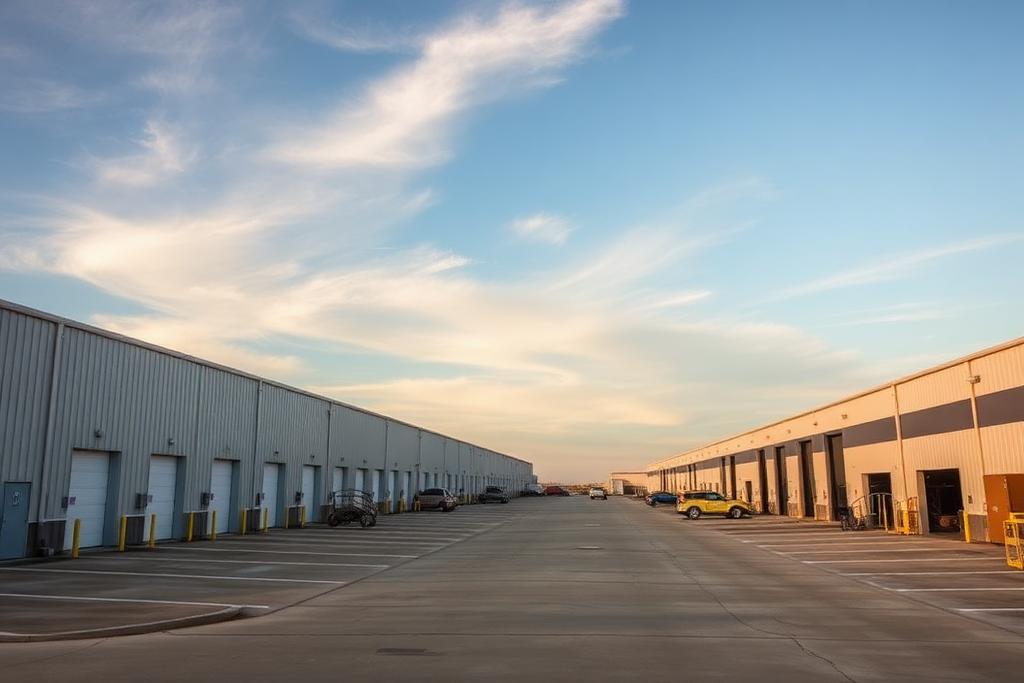
The eastern side of the metro has a deeper stock of affordable industrial and flex space than most of the region, and cannabis operators have used it heavily for indoor cultivation, processing and distribution support. That gives Midwest City a production-weighted profile alongside its neighborhood retail.
Production accounting is therefore central here. Facilities carry significant utility loads, equipment purchases are frequent, labor is split between production and administration, and the product being made has to carry cost through several inventory stages before it is sold. Businesses that expense production costs as incurred cannot measure any of that.
Retail in the area is neighborhood-oriented, with repeat local customers and less transient traffic. Consistency of stock and steady margin management matter more than promotional intensity, and where the same owner runs both retail and production, transfer treatment becomes the accounting question that determines whether either segment can be evaluated.
- Indoor cultivation in eastern metro industrial space
- Processors and product manufacturers in flex facilities
- Neighborhood dispensaries with repeat local customers
- Owners running production and retail under common control
- Businesses with significant equipment and facility investment
- Operators supplying wholesale accounts across the metro
Financial Problems We See Most Often in Midwest City
The specifics differ from one business to the next, but the same handful of issues account for most of what brings Midwest City operators to a cannabis accountant. Each one is a records and process problem before it is a profitability problem.
Utilities left in overhead rather than production cost
Indoor cultivation and processing consume power at a scale that materially affects unit cost. Leaving those costs in general overhead makes product appear cheaper to produce than it is and distorts every pricing decision.
Equipment purchases handled inconsistently
Production equipment is a recurring investment in this market. Without a maintained fixed asset schedule, depreciation, disposals and cost basis all become reconstruction projects at filing time.
Work in process never recorded
Processors that recognize production spending as it occurs rather than carrying work in process report cost of goods sold that jumps between periods for reasons unrelated to sales.
Transfers between owned entities priced arbitrarily
When a grow supplies an affiliated store at an inconsistent value, both segments report margins that are essentially fictional, and consolidated results hide which side is actually performing.
Production labor blended with administration
Payroll recorded in a single account makes it impossible to analyze production efficiency or to support how labor was treated in inventory and cost of goods sold.
Wholesale margin unknown by account
Supplying multiple retail buyers without account-level margin reporting means underperforming relationships persist because nothing in the reporting flags them.
Talk Through Your Midwest City Cannabis Business
A short conversation is usually enough to identify what is actually wrong with the numbers and what it would take to fix it. We will tell you what the work involves before you commit to anything.
Cannabis Bookkeeping in Midwest City
A Midwest City operator can be doing everything right operationally and still have books that cannot answer basic questions. Uncategorized transactions accumulate, cash activity is recorded loosely, vendor bills are entered when paid rather than when incurred, and inventory never touches the ledger. The statements that come out the other end describe bank activity, not the business.
We rebuild that as a repeatable monthly process: reconciliation of every account, disciplined categorization, vendor bills recorded properly, payroll entries tied to the payroll register, inventory movement reflected in the ledger, and a close calendar that produces statements on a predictable date. Details of the ongoing service are on our cannabis bookkeeping page, including historical cleanup for businesses that are months behind.
Dispensary Accounting for Midwest City Retailers
Retail is unforgiving of loose bookkeeping. A Midwest City dispensary can post strong sales and still lose margin to unrecorded shrink, discounting nobody is measuring, cash variances that never get investigated, and inventory values that drift away from reality between counts.
Dispensary bookkeeping and accounting closes those gaps: register-level reconciliation, inventory tracked to cost, COGS built from movement rather than estimated, payroll and vendor activity recorded on time, and reporting that shows margin by category. The service is described on dispensary accounting, with retail industry context on the dispensaries page.
Inventory and Cost Accounting for Midwest City Operators
Inventory is the balance-sheet account that drives everything else for a cannabis business. For Midwest City operators, that means purchases recorded at cost, transfers and adjustments captured, waste documented, physical counts performed on a schedule, and the subledger reconciled to the general ledger.
Get that right and cost of goods sold, gross margin and product profitability become real numbers. Get it wrong and every downstream report inherits the error. Our inventory and cost accounting service covers valuation method, cost capture, count procedures and COGS methodology.
- 01Product received and recorded into inventory at cost
- 02Movement, transfers and adjustments captured as they occur
- 03Waste and shrink documented separately from cost of goods sold
- 04Physical counts performed and reconciled to the subledger
- 05Subledger reconciled to the general ledger each month
- 06Cost of goods sold and gross margin reported from actual movement
Seed-to-Sale Reconciliation for Midwest City Businesses
Seed-to-sale reconciliation is accounting work, not compliance paperwork. For operators in Midwest City, the value is in knowing that the inventory on the books matches the inventory in the tracking system and the inventory on the shelf - and in being able to explain any difference.
We reconcile receipts, transfers, conversions, waste and sales between the regulated system, the operational systems and the ledger, and clean up historical periods where the two records have already separated. See seed-to-sale reconciliation.
280E Analysis for Midwest City Cannabis Businesses
For cannabis businesses in and around Midwest City, IRC Section 280E shapes how the tax return is built and, indirectly, how the accounting should be maintained all year. Federal cannabis scheduling and the application of 280E are evolving areas that require analysis based on current law, the specific business, the products involved and the applicable tax period.
The durable part is the documentation: what was purchased, what it cost, what was produced, what was sold, and how inventory was valued at each period end. Businesses that maintain those records are in a materially stronger position than those reconstructing them later. Our 280E service covers analysis and planning grounded in that material.
Cannabis Tax Preparation in Midwest City
Tax season for a Midwest City cannabis business is largely determined before it starts. When bookkeeping was current, inventory was maintained, payroll was coded and reconciliations happened monthly, preparation is a review exercise. When it was not, the year has to be rebuilt first - under deadline pressure and with weaker documentation than was available at the time.
We prepare federal and Oklahoma returns from tax-ready records: reconciled financial statements, inventory and COGS schedules, fixed asset detail, payroll reports and the supporting schedules a cannabis return needs. Details are on cannabis tax preparation.
Payroll and Labor Accounting for Midwest City Operators
Dispensary payroll and production payroll look different on paper and should look different in the books. For Midwest City operators, coding payroll by department is what makes labor visible: cost per shift on the retail floor, production hours in the back of house, and administrative overhead separated from both.
We handle payroll processing and the accounting around it - entries, accruals, liability reconciliation and functional coding - so labor can be analyzed rather than guessed at. See payroll for cannabis businesses.
Cash Flow Planning for Midwest City Cannabis Businesses
Working capital is the constraint most Midwest City cannabis businesses run into before any other. Inventory absorbs it, payroll consumes it on a fixed schedule, and expansion demands it earlier than expected.
We model cash forward so decisions about purchasing, hiring, equipment and expansion are made against a schedule rather than a hunch - described on cash flow planning and supported by CFO-level analysis where useful.
Financial Reporting for Midwest City Operators
Reporting is where the accounting becomes useful. For Midwest City operators, that means an income statement with real cost of goods sold, a balance sheet with inventory presented correctly, cash flow visibility, and margin detail below the top line.
Our financial reporting service delivers monthly packages with inventory schedules, COGS detail, gross margin by category or product, and budget-versus-actual comparison, on a predictable close calendar.
Cultivation Accounting Near Midwest City
For cultivators operating near Midwest City, the accounting challenge is timing. Money goes out continuously; revenue arrives in bursts tied to harvest and sale. Without production accounting, the income statement reflects payment timing rather than the economics of the grow.
We capture production costs by cycle, carry inventory through its stages, code cultivation labor by function, and reflect yield and waste so cost per unit is measurable. See cultivation accounting and the cultivator industry guide.
Manufacturing and Processor Accounting Near Midwest City
Manufacturing accounting for Midwest City-area operators follows product through conversion: raw materials issued to a batch, labor and production costs accumulating in work in process, finished goods valued at completion, and cost released to COGS at sale.
Each of those steps needs a record behind it. Our processor and manufacturing accounting work establishes them and keeps them current, with related industry material on the manufacturers and processors pages.
Vertically Integrated Operators in the Midwest City Area
Vertically integrated companies operating in the Midwest City area combine cultivation, manufacturing and retail under one roof, and the accounting has to follow product across all three. Internal transfers are where it usually breaks: material leaves one segment at one value and arrives in the next at another, and segment margin stops meaning anything.
We keep cost carrying cleanly across cultivation, manufacturing and retail, with consistent inventory valuation at every handoff and reconciliation through seed-to-sale records.
Fractional CFO Support for Midwest City Cannabis Companies
A part-time cannabis CFO is often the right answer for a Midwest City operator who is growing faster than the finance function. The questions change from what happened last month to what should we do next: whether a second location pencils, what a capital purchase does to cash, which products deserve capacity, and where margin is leaking.
Our fractional CFO work covers forecasting, budgeting, KPI reporting, profitability analysis, expansion modeling and decision support, scaled to the size of the business rather than sold as a fixed package.
Financial Advisory for Midwest City Cannabis Operators
Once a Midwest City business has reliable reporting, the useful conversation shifts to interpretation and action: which products and categories are carrying the company, whether overhead has outgrown gross profit, and what financial controls need to exist before the next stage of growth.
We work through those questions with operators as part of business advisory, with deeper ongoing support available through fractional CFO engagements.
When Midwest City Operators Bring in a Cannabis CPA
Most Midwest City operators reach out at a specific inflection point rather than during a calm quarter. The trigger is often external - a lender request, a tax deadline, a partner asking for numbers nobody can produce - but the underlying cause has usually been building for months.
- Expanding production capacity in existing industrial space
- Cost of goods sold that moves unpredictably between months
- A grow and a store under common ownership with mixed records
- Equipment purchases with no fixed asset schedule behind them
- Wholesale buyers negotiating on price without cost data available
- Preparing a return where inventory support is incomplete
How to Choose a Cannabis CPA for a Midwest City Business
Cannabis accounting is a specialty, and the difference between an accountant who has done it and one who has not becomes obvious within a quarter. Before engaging anyone to work with your Midwest City business, it is worth asking direct questions about how they handle the parts that are specific to this industry.
- How do you maintain perpetual inventory and what does your monthly process look like?
- How is cost of goods sold built, and what documentation stands behind it?
- How do you reconcile seed-to-sale records to the general ledger?
- How is payroll coded, and can labor be analyzed by function?
- What is in the monthly reporting package and when is it delivered?
- How do you approach the 280E position, and what records does it depend on?
- How is historical cleanup scoped and priced separately from ongoing work?
- Who prepares the tax return, and does it come from the same records?
How We Work With Midwest City Cannabis Businesses
Most Midwest City engagements center on production costing and inventory: getting utilities, labor and materials into product cost, carrying inventory through its stages, and making transfers between related operations consistent. Retail reconciliation is then straightforward by comparison.
- 01Consultation covering the business model, systems and current condition of the records
- 02Assessment of what is reliable, what needs cleanup and what is missing
- 03Written scope and pricing for cleanup and ongoing monthly work
- 04Cleanup of prior periods, including inventory and cost of goods sold
- 05Monthly close on a fixed calendar with a full reporting package
- 06Tax preparation and planning built from the same maintained records
Communities We Serve Around Midwest City
Midwest City work extends across the eastern metro, including Del City, Choctaw, Harrah, Nicoma Park, Spencer and eastern Oklahoma City. Many operators in this area hold both production and retail interests, and the reporting is structured to keep those segments distinct.
We work with licensed cannabis businesses across Oklahoma. Statewide context is on our cannabis CPA Oklahoma page, and other markets we serve are listed on the locations page.
Services for Midwest City Cannabis Businesses
Cannabis Bookkeeping
Monthly close, reconciliation and inventory-aware bookkeeping.
Read moreDispensary Accounting
Retail sales reconciliation, inventory, COGS and margin reporting.
Read moreInventory & Cost Accounting
Valuation, cost capture, counts and defensible cost of goods sold.
Read more280E Tax Compliance
Analysis and planning grounded in inventory and cost records.
Read moreCannabis Tax Preparation
Federal and Oklahoma returns prepared from maintained records.
Read moreFractional CFO
Budgeting, forecasting, KPIs and expansion analysis.
Read moreMidwest City Cannabis Accounting FAQs
- How should utility costs at a grow or processing facility be treated?
- Utilities directly supporting production are part of the cost of producing inventory and should be captured into product cost rather than left in general overhead. Doing so requires a documented allocation basis applied consistently, which we set up as part of the cost accounting work.
- What is work in process and do we need to track it?
- Work in process is production that has started but is not yet finished, saleable product. Processors and manufacturers holding material in conversion need to carry it, otherwise production spending hits the income statement in the wrong period and cost of goods sold becomes erratic.
- We own a grow and a dispensary. How should transfers be handled?
- On a consistent, documented basis so cost carries cleanly from one entity to the next. That allows each segment to be evaluated on its own performance and keeps consolidated statements accurate. Arbitrary or fluctuating transfer values make segment reporting meaningless.
- Do you maintain fixed asset and depreciation schedules?
- Yes. Production equipment, build-out costs and facility improvements are tracked on a maintained schedule with additions, disposals and depreciation recorded during the year rather than reconstructed at filing.
- Can you show margin by wholesale account?
- Yes, once product-level cost exists. Reporting revenue and gross margin by buyer shows which accounts are worth expanding and which are priced below what production actually costs, which is often the most immediately useful output of a costing engagement.
- Do you work with Midwest City operators in person?
- Work is delivered remotely, with electronic document exchange, accounting system access and scheduled review calls. We do not maintain an office in Midwest City. Remote delivery is standard in cannabis accounting and does not limit the depth of the engagement.
- How is production labor supposed to be recorded?
- Coded by function, so production, packaging, supervision, retail and administrative labor are separable. That supports both operational analysis and the documentation behind how labor is treated in inventory and cost of goods sold.
- Our COGS changes every month. Where does that come from?
- Usually inventory process rather than the business itself: production costs expensed rather than capitalized, counts that do not tie to the ledger, unrecorded transfers or waste, and inconsistent treatment of labor or packaging between periods. Correcting the process stabilizes the reporting.
Industry and Resource Guides
Discuss Your Operation With a Cannabis Accounting Specialist
Call to talk through your license types, current records, and reporting needs, or schedule a consultation at a time that works for your team.