Resource for Oklahoma Cultivation Startups
How to Start a Cannabis Grow Business in Oklahoma
This guide covers the financial side of launching a cultivation operation in Oklahoma: how to budget a buildout, how much operating capital the first production cycles consume, how to structure an accounting system that can handle production costing from day one, and where new grows most often get into trouble. Licensing and legal requirements are noted at a high level and should be verified with the appropriate Oklahoma authority.
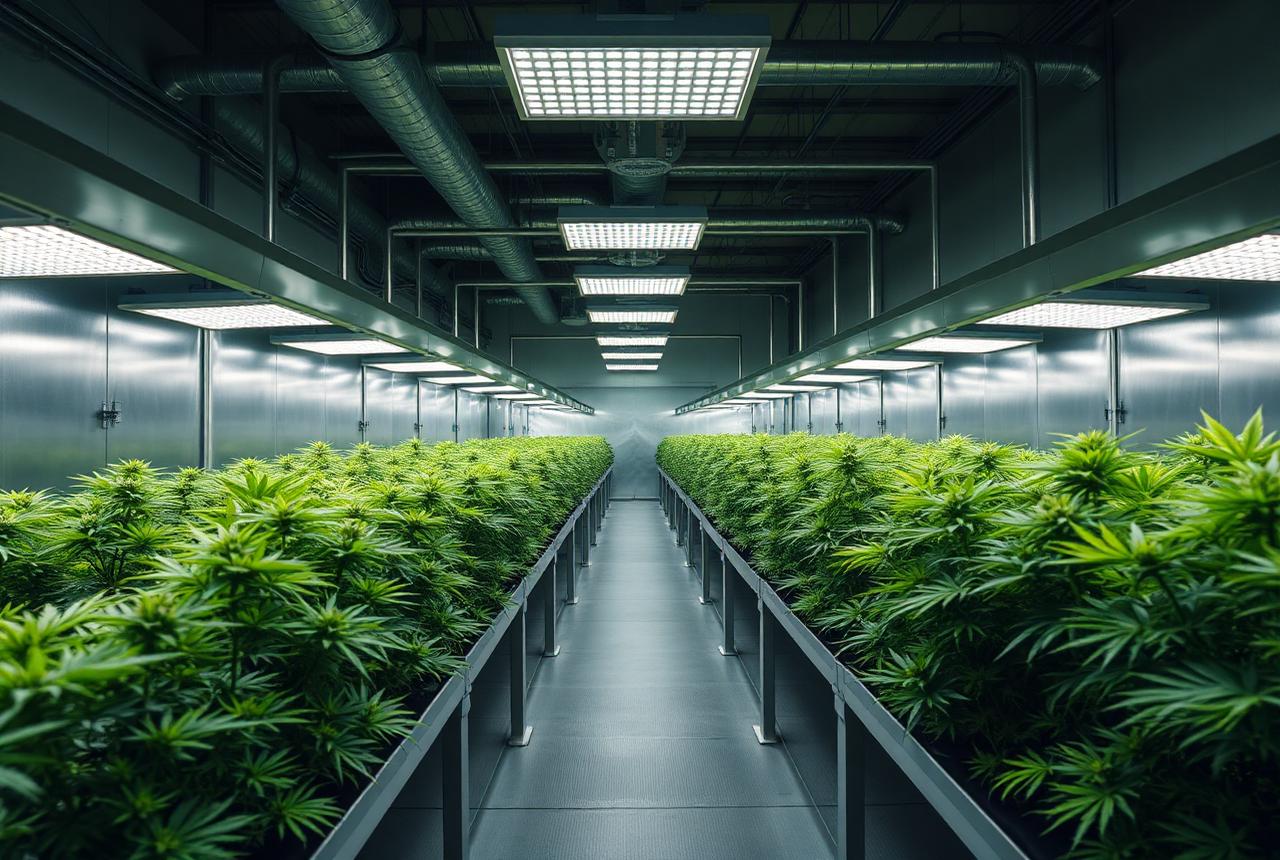
What Starting a Grow Business in Oklahoma Actually Involves
A cultivation business is a manufacturing operation with a biological production cycle and a regulatory overlay. Success or failure is usually decided by two things that have nothing to do with horticulture: whether the operation was capitalized well enough to survive the gap between first spend and first collected revenue, and whether production costs were captured accurately enough for the owner to know what a gram actually costs to produce. Everything in this guide serves those two questions.
Business Planning and the Financial Model
A grow business plan is only as useful as the model beneath it. The model should run weekly rather than annually for at least the first year, because that is the resolution at which cash problems appear. At minimum it should show buildout spending by month, the production cycle from start to first saleable output, operating costs during that period, expected yield at a deliberately conservative assumption, expected pricing with a downside case, and the resulting cash position week by week.
- Production method and capacity assumptions stated explicitly
- Yield modeled conservatively, with a downside case
- Pricing scenarios rather than a single expected price
- Weekly cash position through the first full cycle and beyond
- A clear statement of what happens if the first cycle underperforms
Entity and Financial Structure
Entity choice affects tax treatment, ownership flexibility, how capital enters the business and how future investors or lenders view it. Cultivation groups sometimes separate real estate, equipment or management functions into distinct entities, which can be reasonable or can create problems depending on the facts and the economic substance of the arrangements. Structures marketed as ways to avoid federal tax limitations have drawn scrutiny and should be evaluated on substance with tax and legal counsel rather than adopted from a template.
Structure work is covered on our entity structuring page. Ownership and eligibility requirements under Oklahoma law should be confirmed with counsel and with the state authority before formation.
Licensing and Regulatory Considerations at a High Level
Commercial cultivation in Oklahoma is licensed and regulated by the Oklahoma Medical Marijuana Authority, with additional obligations that can involve state tax registration, local zoning and permitting, facility requirements and participation in the state's electronic seed-to-sale tracking system. Requirements, fees, eligibility criteria and timelines are set by the state and are revised periodically.
Startup Budgeting
A grow startup budget has two halves that are frequently conflated. The first is capital spending: facility acquisition or lease costs, buildout, environmental systems, lighting, irrigation, benching, security and other equipment. The second is operating capital: the payroll, utilities, inputs, insurance, professional fees and overhead consumed while the first crops are growing. Budgets that treat only the first half as the real number are the most common cause of early distress.
Capital spending
Facility, buildout, environmental and lighting systems, irrigation, security, and production equipment. Largely one-time, often underestimated on the buildout line.
Operating capital
Payroll, utilities, nutrients and media, insurance, professional fees and overhead from first spend through first collected revenue.
Reserves
Tax reserves and a contingency for schedule slippage, equipment failure or a weaker first harvest than modeled.
What varies most
Facility condition, production method, scale, and whether space is leased or purchased. These drive most of the spread between one operator's budget and another's.
Equipment and Facility Costs
Equipment and facility spending is not only a cash question, it is an accounting one. Purchases must be classified between items expensed as incurred, items capitalized and depreciated, and leasehold improvements, and the treatment affects both financial statements and tax. Recording these correctly at purchase, with invoices retained, is much simpler than reconstructing the classification later from bank activity.
Accounting System Setup Before You Open
The accounting system should exist before the first invoice arrives. That means accounting software selected and configured, a chart of accounts built for production rather than a generic retail template, bank accounts opened and connected, a document retention approach agreed, and a written costing policy drafted. Pre-opening spending is recorded from day one so organizational costs, startup costs and capitalizable items are separable later.
- 01Select accounting software and configure the fiscal calendar
- 02Build a production-oriented chart of accounts
- 03Open bank accounts and establish cash handling procedures
- 04Document the inventory costing policy in writing
- 05Record pre-opening costs by category from the first transaction
- 06Set a monthly close date before operations begin
Chart of Accounts for a Grow Operation
The purpose of a cultivation chart of accounts is to make the boundary between production activity and everything else visible at the transaction level. Direct production costs, indirect production costs and general operating costs should be separable without a spreadsheet exercise. Inventory should reflect the stages product moves through. Payroll should be coded by function rather than pooled. Waste and adjustment accounts should exist so those events are recorded rather than absorbed.
The mechanics of maintaining this structure are covered under cannabis bookkeeping, and the costing methodology under inventory and cost accounting.
Banking and Cash Controls
Banking access in this industry is uneven and can change, which means a new operator should establish relationships early and plan for the possibility of interruption. Where cash is handled, procedures should be documented before opening: who counts, when, how counts are recorded, how deposits are documented, and how variances are escalated. Controls established at launch are considerably easier to sustain than controls introduced after a problem.
Planning a Grow? Model the Numbers Before the Buildout
A conversation early in the planning stage is usually the cheapest part of a cultivation startup. Call to talk through your budget, capital needs and accounting setup, or schedule a consultation.
Payroll for a New Cultivation Operation
Cultivation labor is typically the largest ongoing cost, and how it is recorded matters beyond writing the checks. Payroll coded by function, supported by time records where practical, allows cultivation labor, harvest and post-harvest work, supervision and administrative time to be distinguished. That distinction is what allows labor to be related to production properly rather than treated as one undifferentiated expense.
Payroll accounting is covered on our cannabis payroll page.
Inventory Accounting
Inventory in a grow is not a single balance. Product moves through stages, costs accumulate against it, waste occurs, and finished material eventually becomes available for sale or transfer. Ending inventory should be supported by counts and production records rather than estimated, because that balance is what makes cost of goods sold meaningful. New operations that defer inventory discipline usually discover the gap during their first tax preparation, when reconstructing it is hardest.
Production and Cost Accounting
Production accounting relates cost to output. In practice that means capturing direct production costs as they occur, allocating shared costs on a documented and measurable basis, and organizing the result so that production periods can be compared. Without it, an operator can see total spending but cannot answer whether a room, a cultivar or a cycle was economically worthwhile.
- Direct production costs captured at the transaction level
- Indirect costs allocated on documented drivers such as square footage or labor hours
- Costs organized so cycles can be compared on a like-for-like basis
- A written policy describing the method and effective period
Cost of Goods Sold
Conceptually, cost of goods sold reflects beginning inventory plus costs added during the period, less ending inventory. Because cost of goods sold reduces gross receipts rather than functioning as an ordinary deduction, what is properly capitalized into inventory carries significant weight for a cannabis business. What may be included is a facts-and-circumstances determination under applicable accounting and tax rules and should be settled with a qualified advisor rather than assumed.
Yield and Waste Tracking
Yield and waste are financial data as much as operational data. Waste that is recorded with a reason gives management a signal; waste absorbed silently into a cost pool gives them nothing and weakens inventory support. New operations should decide before their first harvest how yield is measured, at what point, by whom, and how it is recorded in both the tracking system and the accounting records.
METRC and Seed-to-Sale Records
Oklahoma licensees report product movement through the state's electronic seed-to-sale tracking system. It is an operational compliance tool rather than an accounting system, and it does not value inventory for accounting purposes. From the start, a grow should treat tracking data and accounting data as two records that must agree, with a routine for comparing them and investigating differences.
Background is in our Oklahoma METRC and seed-to-sale guide, and the service work in METRC reconciliation.
Tax Planning for a New Grow
Tax planning for a cultivation startup begins with the structure, the accounting method and the inventory costing policy, because those determine what the return can support. Reserving for tax obligations from the first revenue is equally important: cannabis businesses frequently owe amounts that do not track reported book profit, and an operator who has not reserved discovers this at the worst possible moment.
See cannabis tax preparation and 280E tax compliance for how these are handled in practice.
Cash-Flow Forecasting and Working Capital
Working capital is the amount required to fund operations between spending and collection. For a grow that window is long, which is why forecasting matters more here than in most small businesses. A weekly forecast covering payroll, utilities, inputs, loan payments and tax reserves against expected collections shows the low point in advance, when there is still time to act.
Ongoing forecasting is covered on cash flow planning.
Financial Reporting From the Start
Reporting habits established at launch tend to persist. A closed month with reconciled balances, supported inventory and a consistent statement package gives an owner something to manage with, and gives a future lender or investor something credible to review. Reports assembled sporadically from unreconciled data do neither.
Common Accounting Mistakes New Grow Operations Make
- Budgeting the buildout but not the production cycle that follows it
- Running the business through a personal or mixed bank account in the early months
- Using a generic chart of accounts with no separation of production costs
- Pooling all payroll into a single account with no functional coding
- Treating inventory as an estimate rather than a supported balance
- Deferring bookkeeping until tax season, when source records are already gone
- Failing to reserve for taxes from the first revenue
- Recording equipment purchases without distinguishing capitalizable items
- Assuming the tracking system is also the accounting system
When to Involve a Cannabis Accountant
Most operators benefit from involving an accountant during planning rather than after the first year. The decisions that are expensive to reverse, entity structure, accounting system design, costing policy and capital planning, all occur before revenue. Once operations begin, the recurring relationship typically covers monthly bookkeeping, inventory and COGS support, reconciliation, reporting and tax preparation.
Ongoing cultivation work is described on our cultivation accounting page, and the broader financial setup checklist for any license type is in the cannabis startup guide. For a wider view of accounting practice in the state, see the Oklahoma cannabis accounting guide.
Oklahoma Grow Startup FAQs
- How do you start a cannabis grow business in Oklahoma?
- At a high level, a grower needs a business plan and financial model, an entity and ownership structure, capital sufficient for buildout and the first production cycles, a licensed and compliant facility, an accounting system set up before operations begin, and staffing. Licensing requirements are set by the Oklahoma Medical Marijuana Authority and change over time, so requirements, eligibility and fees should be verified directly with that authority and with qualified counsel before you commit capital.
- How much capital does a new Oklahoma grow need?
- There is no single figure. Capital requirements depend on indoor versus greenhouse versus outdoor production, facility size and condition, equipment selection, whether the space is leased or purchased, and how many production cycles must be funded before meaningful revenue arrives. The reliable approach is to build a line-item budget for buildout and then add operating capital for the full period between first spend and first collected revenue.
- What is the most common financial mistake new grows make?
- Funding buildout while underfunding the production cycle that follows it. A grow spends on labor, nutrients, utilities and facility costs for weeks or months before there is finished product to sell, and businesses that budget only for construction and equipment frequently run short exactly when the first cycle is underway.
- When should a new grow set up its accounting system?
- Before operations begin. Pre-opening costs, equipment purchases, leasehold improvements and organizational expenses all need to be captured as they occur, and a chart of accounts designed for production is far easier to establish at the start than to retrofit after a year of miscoded transactions.
- What accounts should a cannabis grow's chart of accounts include?
- Beyond the standard structure, a grow generally needs separation between direct production costs, indirect production costs and general operating costs, along with inventory accounts reflecting production stages, accounts for waste and adjustments, and payroll accounts coded by function. The exact structure depends on the operation and should be set with your accountant.
- Do I need a cannabis-specific accountant to start a grow?
- Not to register a business, but the accounting decisions made in the first months, particularly around cost classification and inventory, have lasting tax and reporting consequences. Most operators involve an accountant familiar with licensed operations during planning rather than after the first year.
- How is production accounting for a grow different from ordinary bookkeeping?
- Ordinary bookkeeping records revenue and expenses as they occur. A grow accumulates costs against production over a multi-week cycle before anything is saleable, so the accounting must handle cost accumulation, inventory, waste and yield, and the release of cost into cost of goods sold. That machinery does not exist in a standard service business ledger.
- What should a new grow know about 280E?
- Section 280E of the Internal Revenue Code limits ordinary business deductions for businesses treated as trafficking in a federally controlled substance, which places weight on cost of goods sold and therefore on inventory and production cost accounting. Federal treatment can change through legislation, rescheduling or litigation, so plan under current law for the applicable tax period and revisit it with a qualified advisor as circumstances change.
- How long before a new grow generates revenue?
- That depends on production method, facility readiness, cycle length and sales channels, so it should be modeled specifically rather than assumed. What matters financially is that the model shows every week between first expenditure and first collected revenue, because that gap is what working capital has to cover.
- Is this page legal or licensing advice?
- No. This is general financial and accounting information for people planning a cultivation business in Oklahoma. Licensing, zoning, employment and regulatory requirements should be confirmed with the appropriate Oklahoma authorities and with qualified legal counsel.
Related Services
Cultivation Accounting
Production cost accounting, inventory and COGS for Oklahoma grows.
Read moreInventory and Cost Accounting
Costing methodology, inventory support and margin visibility.
Read moreCash Flow Planning
Working capital and weekly cash forecasting for production businesses.
Read moreCannabis Payroll
Payroll accounting and functional labor coding.
Read moreEntity Structuring
Entity and ownership structure considerations for new operators.
Read moreCannabis Tax Preparation
Return preparation built from reconciled books.
Read moreRelated Guides
Cannabis Startup Guide
Financial setup for new cannabis businesses across all license types.
Read moreOklahoma Cannabis Accounting Guide
Reference walkthrough of cannabis accounting practice in Oklahoma.
Read moreCultivation Accounting Guide
Concepts behind production costing for grow operations.
Read moreGet the Financial Side of Your Oklahoma Grow Right From the Start
Call to talk through your startup budget, capital needs, entity structure and accounting setup, or schedule a consultation to review your plan before the buildout begins.