Oklahoma Cannabis Cultivators
Accounting & Financial Guidance for Oklahoma Cannabis Cultivators
Cultivation is a production business. Money goes out for labor, inputs, utilities, equipment and facilities long before a harvest turns into revenue, inventory moves through several stages, and seed-to-sale records have to stay consistent with the books. This guide covers the financial side of running a grow in Oklahoma: production costs, inventory, COGS, payroll, cash flow, reporting and tax records.
- Production
- Costed by cycle
- Inventory
- Traced to records
- Labor
- Coded by function
- Cash
- Planned around harvest
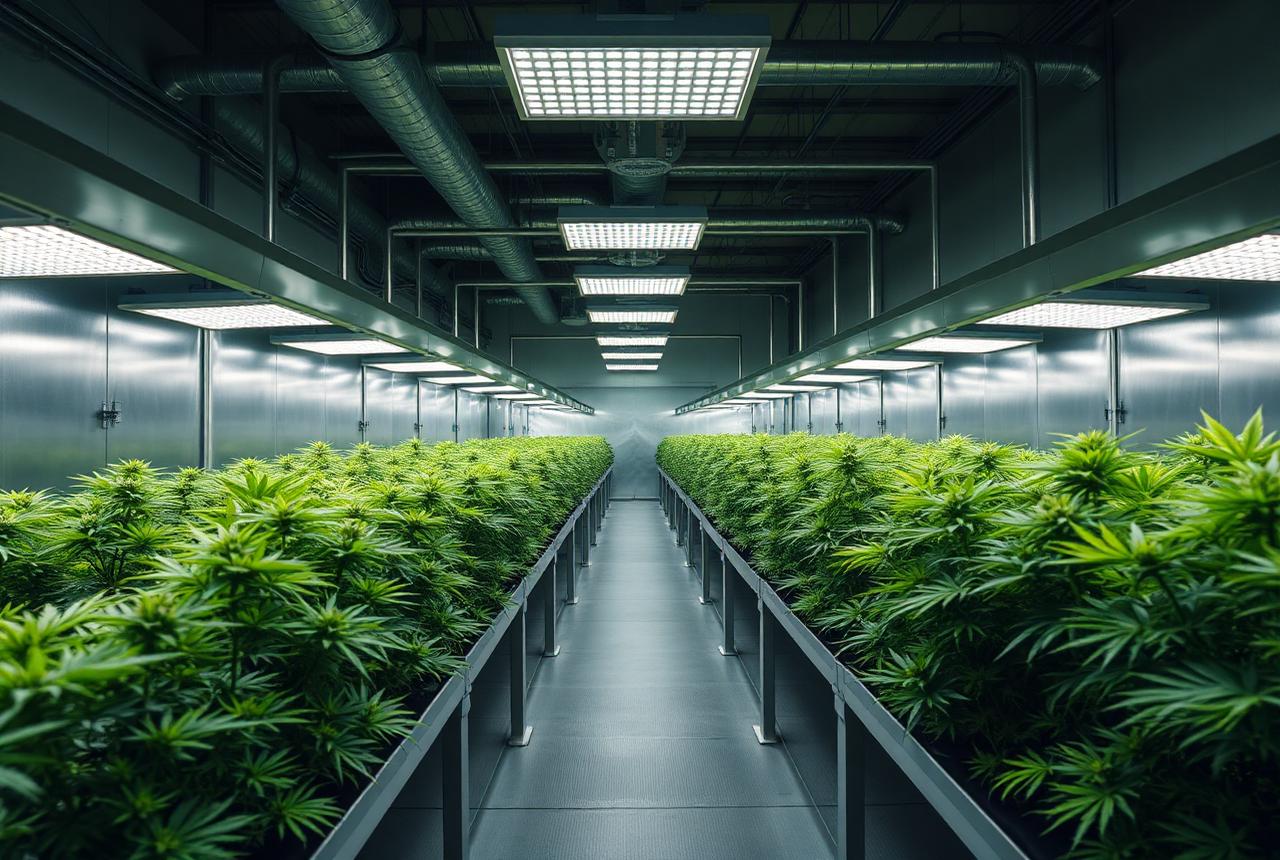
Financial Challenges Facing Oklahoma Cannabis Cultivators
A cultivation business carries the economics of manufacturing with the biology of agriculture on top of it. Payroll runs every cycle whether or not anything has been harvested. Nutrients, growing media and production supplies are purchased ahead of use. Utilities for lighting, climate control and dehumidification continue regardless of what stage the rooms are in. Rent or mortgage on the facility, along with the equipment inside it, has to be paid on a schedule that has nothing to do with when product finishes curing.
On the other side of that spending is inventory rather than revenue. Product finishes, gets tested where applicable, and then waits for a buyer, a transfer, or the retail side of a vertically integrated operation. In between, yield varies, some material is lost to waste, and pricing is set by a wholesale market the grower does not control. Cash and profit can move in different directions for months at a time, and operators who only watch the bank balance often cannot say which is happening.
- Production spending that occurs well before the resulting revenue
- Labor as the largest and most variable operating cost in many grows
- Facility, utility and environmental control costs that run continuously
- Equipment purchases and facility improvements with long useful lives
- Cultivation inputs, supplies and testing costs tied to specific production
- Inventory held across several physical stages at any given moment
- Waste and yield variation that change the cost carried by finished product
- Wholesale pricing pressure that makes cost visibility essential
- Working capital needed to bridge the gap between spending and sales
- Tax obligations and reporting requirements that depend on accurate records
Why Cannabis Cultivation Accounting Is Different
Ordinary small-business accounting is built around a simple pattern: earn revenue, incur expenses, report the difference. That works for a service business where costs and revenue land in the same period. A grow breaks the pattern. Costs accumulate for weeks against plants that do not yet exist as saleable product, then move with that product into inventory, then stay on the balance sheet until a sale occurs.
If those costs are simply expensed as they are paid, the income statement shows losses during production months and unusually strong months whenever a harvest sells. Nothing in that pattern tells the operator what a cycle cost, whether the last harvest was better or worse than the one before, or what the inventory sitting in the vault is actually worth. Add regulated seed-to-sale records that track the same physical product independently, and the need for production-aware accounting becomes hard to avoid.
- 01Costs incurred — labor, inputs, utilities, facility, supplies
- 02Costs accumulate against plants in production
- 03Harvest — costs move with the product
- 04Drying, curing and packaging
- 05Inventory held and reconciled to seed-to-sale records
- 06Sale or transfer — cost of goods sold recognized
If you are looking for the hands-on service rather than the overview, our cannabis cultivation accounting services for Oklahoma growers page covers how that work is actually performed, including production cost accounting, inventory and COGS support.
Talk Through Your Grow's Numbers
If you cannot say what a cycle costs, why inventory and the books disagree, or where your margin is going, a short conversation is usually enough to identify what needs attention first.
Cannabis Cultivation Cost Accounting
Cost accounting answers a question every grower eventually asks: what does it actually cost us to produce what we sell? Answering it requires capturing production spending at a level that matches how the operation runs, whether that is by room, cycle, batch or harvest group, and then relating that spending to the output it produced.
- Cultivation labor, including planting, maintenance, harvest and trim
- Nutrients, amendments and other cultivation inputs
- Growing media, containers and propagation materials
- Utilities associated with production areas
- Facility costs attributable to cultivation space
- Production supplies and consumables
- Testing costs where applicable to the product
- Harvest, drying, curing and packaging costs
- Equipment-related costs, including depreciation where appropriate
The mechanics of building and maintaining that structure sit with cultivation accounting and inventory and cost accounting.
Inventory Accounting for Cannabis Growers
Inventory is where most of a cultivation business's value sits at any given moment, and it is also where most accounting problems begin. Product exists in several physical states simultaneously, quantities change through drying and trimming, and units of measure shift between plant counts and weight.
Production inventory
Plants in vegetative and flowering stages carrying accumulated production costs.
Work in process
Harvested material in drying, curing or trimming that is not yet saleable.
Finished product
Cured, tested and packaged inventory available for sale or transfer.
Adjustments and waste
Destruction, moisture loss and corrections that reduce recorded quantities.
Inventory affects both financial statements at once. On the balance sheet it is an asset; on the income statement, the change in inventory drives cost of goods sold. That is why an inaccurate inventory balance does not just misstate one number, it distorts profitability analysis for the entire period. Physical counts, documented transfers and consistent period-end procedures are what keep the balance credible.
Cannabis Cultivation COGS
Cost of goods sold is conceptually simple and operationally demanding. Beginning inventory, plus the production costs added during the period, less ending inventory, equals the cost of what was sold. Every term in that calculation depends on records that most cultivation businesses have to deliberately build.
- 01Beginning inventory from the prior period close
- 02Production activity and cost accumulation during the period
- 03Transfers between production stages
- 04Ending inventory supported by counts and production records
- 05Cost of goods sold and gross margin
When COGS swings unpredictably from month to month while operations are stable, the cause is almost always the inventory figure rather than the growing. Reliable COGS requires reliable inventory and production records, in that order. Because inventory and COGS also sit at the center of cannabis tax analysis, the same records support 280E tax compliance work, and the detailed methodology lives on the cultivation accounting page.
Labor and Payroll for Cannabis Cultivators
Labor is usually the largest controllable cost in a grow and the one most often recorded in a way that makes analysis impossible. When every paycheck posts to a single payroll expense account, there is no way to separate the cost of growing from the cost of running the company.
- Cultivation staff working in vegetative and flowering rooms
- Harvest, trim and post-harvest processing labor
- Production supervision and facility management
- Administrative, compliance and management staff
- Contract or seasonal labor used around harvest
- Time records that support how payroll is coded
- Department or function coding within the payroll and accounting systems
- Cash requirements for payroll runs that continue between harvests
Setting payroll up so that the coding is useful, and keeping it accurate every cycle, is covered under cannabis payroll services.
Equipment and Facility Accounting
Cultivation is capital intensive. Lighting, HVAC, dehumidification, environmental controls, irrigation and fertigation systems, benching, extraction of heat and air, drying rooms and security infrastructure all represent significant spending, and much of it has a useful life measured in years rather than months.
- Lighting systems and replacement components
- HVAC, dehumidification and environmental control equipment
- Irrigation, fertigation and water treatment systems
- Production equipment, benching and racking
- Leasehold and facility improvements
- Repairs and maintenance versus capitalizable improvements
- Financed or leased equipment and the related obligations
A fixed-asset register that lists what was purchased, when it was placed in service, what it cost and how it is being depreciated is basic infrastructure. Without it, depreciation is unsupported, insurance and financing conversations become difficult, and capital spending disappears into general expenses where no one can evaluate it.
Seed-to-Sale Tracking and Cultivation Accounting
Seed-to-sale tracking and financial accounting are two systems describing the same physical product for different reasons. The tracking system records plants, packages, transfers, adjustments and waste as a regulatory and operational record. The accounting system records the financial value of that activity. Neither replaces the other, and they will never match line for line, but they should not develop unexplained divergence.
- Seed-to-sale plant and package records
- Harvest records and wet-to-dry weight documentation
- Production and batch records maintained by the cultivation team
- Physical inventory counts performed on a schedule
- Inventory balances in the accounting system
- General ledger inventory and COGS accounts
The reconciliation work itself, including tracing differences between tracking records and the books, is handled under METRC and seed-to-sale reconciliation. For general background on how tracking systems function, see our METRC guide.
Cultivation Inventory Reconciliation
Differences between physical inventory, tracking records and the accounting system are normal. Unexplained differences are not. Most discrepancies come from a short list of recurring causes, and knowing that list is half the work of resolving them.
Timing and cutoff
Activity recorded in one system before or after the other, especially around period end.
Waste and destruction
Material removed physically and in the tracking system but never reflected in the books.
Unit-of-measure mismatches
Plant counts, wet weight and dry weight compared without a consistent conversion.
Transfers and adjustments
Movements between rooms, stages or facilities recorded inconsistently.
Harvest entries
Harvest recorded in production records but not converted into an accounting entry.
Data-entry errors
Manual entries, duplicated packages or miscoded quantities in either system.
A difference that cannot be explained is a signal about the underlying process, not just a number to force into agreement. Investigating it while the records are recent is far easier than reconstructing it during a tax filing or a review.
Cash Flow Challenges for Cannabis Cultivators
The central cash problem in cultivation is timing. Spending happens continuously; revenue happens in bursts tied to harvest and sale. A grower can be profitable on paper and still be unable to make payroll in the weeks before a harvest converts into cash.
- 01Payroll, inputs, utilities and rent paid throughout the cycle
- 02Equipment and facility spending as capacity expands
- 03Harvest completed — value now sits in inventory
- 04Product cured, tested and packaged
- 05Sale or transfer, with receivables where applicable
- 06Cash received, and tax obligations funded
Planning around that gap, including runway, working capital and the timing of tax payments, is covered under cash flow planning.
Budgeting and Forecasting for Cannabis Growers
A cultivation budget is really a production plan expressed in dollars. It starts with how many cycles are planned, in what space, producing what expected output, and works outward from there into the costs required to support that plan and the cash needed to fund it.
- Planned production cycles and expected output
- Expected sales volume and pricing assumptions
- Labor plan by function and by cycle
- Cultivation inputs and production supplies
- Utilities and facility costs
- Equipment purchases and facility improvements
- Inventory build and drawdown across the period
- Cash requirements and timing
- Tax obligations and estimated payments
Growers who want this maintained as an ongoing management function, with forecast versus actual review each period, typically engage fractional CFO support.
Understanding Cultivation Profitability
Revenue tells you how much product moved. It says nothing about whether growing it was worth doing. Profitability analysis for a cultivator starts with gross profit: revenue less the cost of the product actually sold, which means it depends entirely on the inventory and cost records described above.
- Revenue by product type, buyer or channel
- Production cost of the product sold
- Gross profit and gross margin percentage
- Labor as a share of production cost
- Yield achieved relative to space and cycle
- Waste and its effect on cost per unit
- Facility and utility costs relative to output
- Operating expenses below the gross margin line
- Inventory levels and how long product sits before sale
- Pricing relative to production cost
Where an operator wants help interpreting these numbers and deciding what to change, business advisory and financial reporting cover that work.
Yield, Waste and Production Economics
Unit economics in cultivation are unusually sensitive to output. The same facility cost, the same lighting load and largely the same labor produce a different number of saleable units depending on how a cycle goes. When output falls, the fixed portion of production cost spreads across fewer units and cost per unit rises, even though nothing about spending changed.
- Production output achieved per cycle and per room
- Yield variation between cycles, genetics or growing methods
- Waste, destruction and material lost during processing
- Labor hours required per unit of output
- Production input costs relative to output
- Facility utilization and unused capacity
Cannabis Cultivation Financial Reporting
Reporting is how the accounting work becomes usable. A cultivator reviewing the right information each month can see problems while they are still small; one reviewing only a bank balance and a tax return sees them a year late.
- Income statement with production costs presented meaningfully
- Balance sheet showing inventory and fixed assets
- Cash flow information covering the production cycle
- Inventory schedules by stage
- COGS detail supporting gross margin
- Gross margin trends across periods
- Budget versus actual comparison
- Production cost analysis by cycle, room or batch
Recurring management reporting is delivered through cannabis financial reporting.
Cannabis Cultivators and IRC Section 280E
Federal cannabis scheduling and the application of IRC Section 280E are evolving areas that require analysis based on current law, the specific business, the products involved and the applicable tax period. Nothing on this page is a tax position, and no general statement can substitute for analysis of a particular operation in a particular year.
What does not change is the role of records. Whatever the applicable rules are when a return is prepared, the treatment of inventory and cost of goods sold depends on documentation: production records showing what was grown and when, inventory records supporting the balances claimed, cost documentation supporting how costs were accumulated, and financial statements that tie to all of it. Cultivators with strong records have options; cultivators without them do not.
Analysis and planning work is covered under 280E tax compliance and planning, with background reading in our 280E explained guide.
Tax Preparation for Cannabis Cultivators
Tax preparation for a grow is largely determined before the return is started. If the year's accounting is complete and reconciled, preparation is an exercise in reporting. If it is not, the first months of the following year are spent reconstructing the prior one.
- Revenue records by period and by channel
- Inventory balances supported by counts and production records
- Cost of goods sold and the accumulation behind it
- Payroll records and functional coding
- Fixed-asset register and depreciation schedules
- Operating expense detail with supporting documentation
- Bank, vendor and inventory reconciliations
- Supporting schedules that tie the financial statements together
Return preparation itself is handled through cannabis tax preparation, and Oklahoma-specific tax background is collected in the Oklahoma cannabis tax guide.
Bookkeeping for Cannabis Cultivation Businesses
Everything above rests on ordinary bookkeeping being done well and done on time. Cost accounting, inventory reporting and tax analysis all read from the same ledger, and none of them can be better than the entries underneath.
- 01Bank and card activity recorded and reconciled
- 02Vendor bills and purchases entered against the right accounts
- 03Payroll posted with functional coding
- 04Inventory and production entries recorded for the period
- 05Equipment and facility spending captured on the fixed-asset register
- 06Revenue recorded and reconciled to sales records
- 07Journal entries and adjustments reviewed
- 08Month-end close and financial statements issued
Ongoing monthly work is covered under cannabis bookkeeping.
Starting a Cannabis Grow Business in Oklahoma
New cultivation businesses tend to focus entirely on the build-out and the growing, and to treat accounting as something to sort out later. That order is expensive. The first year produces the inventory balances, cost history and fixed-asset records that every later analysis depends on, and reconstructing them after the fact costs more than setting them up correctly at the start.
- An accounting system chosen with production in mind
- A chart of accounts that separates production costs from operating expenses
- Bookkeeping performed on a regular schedule from month one
- Payroll set up with functional coding before the first hire
- Inventory accounting procedures agreed with the cultivation team
- Production cost tracking at the level the operation actually runs
- Cash forecasting through the first production cycles
- Tax records organized as the year progresses
- Financial reporting reviewed by someone who acts on it
For the broader picture of getting a cannabis business off the ground, including what to plan for before opening, read our guide to starting a cannabis business in Oklahoma. This page stays focused on the financial management of cultivation operations that are already running.
Accounting Systems for New Oklahoma Cannabis Growers
The financial infrastructure a new grow needs is not exotic, but it does need to be deliberate. Decisions made in the first few months are difficult to unwind once a year of transactions has run through them.
Banking and payments
Dedicated business banking, with personal and business activity kept fully separate.
Accounting software
A system that can support inventory, departmental coding and the reporting you need.
Chart of accounts
Built so production costs, inventory and operating expenses are distinguishable.
Vendor and purchasing records
Consistent capture of what was bought, for which purpose and for which production.
Payroll setup
Functional or departmental coding in place before headcount grows.
Inventory procedures
Documented counting, transfer and adjustment routines the grow team follows.
Fixed assets
A register capturing equipment and improvements as they are placed in service.
Month-end close
A repeatable routine that ends with financial statements, not a shoebox in April.
Growing From a Single Facility to a Larger Cultivation Operation
Scale changes the accounting more than most operators expect. A single-room grow can be managed by someone who knows where everything is. A larger operation cannot, and the systems have to carry the knowledge instead.
- More employees, more payroll complexity and more coding decisions
- Larger inventory balances with more movement between stages
- Additional equipment and a growing fixed-asset base
- Higher working-capital requirements to fund longer pipelines
- Multiple production areas that management wants to compare
- Additional facilities and the reporting that comes with them
- Interfacility transfers that must be recorded consistently
- Management reporting for people who are no longer on the floor daily
- Capital planning for expansion and major purchases
Growth planning of this kind usually pairs fractional CFO support with cash flow planning, since expansion consumes cash long before it produces it.
Multi-Facility Cannabis Cultivators
Operators running more than one cultivation site need two views at once: how each facility is performing on its own, and what the business looks like consolidated. Either view alone hides something important.
- Facility-level reporting for revenue, production cost and margin
- Inventory transfers between facilities recorded consistently
- Shared and corporate expenses allocated on a defensible basis
- Labor tracked by facility and by function
- Equipment and depreciation assigned to the right location
- Production costs comparable across sites
- Consolidated financial statements for the whole business
- Facility profitability analysis that informs where to invest
Multi-site inventory work in particular depends on inventory and cost accounting discipline at each location, not just at the consolidated level.
Vertically Integrated Cannabis Businesses
Many Oklahoma operators combine cultivation with processing, manufacturing or retail. Vertical integration is operationally attractive and accounting-intensive, because product no longer leaves the business at harvest. It moves internally, carries its accumulated cost with it, and is transformed again before it reaches a customer.
- 01Cultivation produces harvested and cured product
- 02Internal transfer to processing or manufacturing
- 03Conversion into finished products with additional cost added
- 04Transfer to retail inventory
- 05Retail sale to the end customer
That means the financial systems have to follow product across stages: cultivation accounting, manufacturing accounting and dispensary accounting all feed the same consolidated picture, supported by inventory and cost accounting and METRC reconciliation across every stage.
Common Financial Problems for Cannabis Cultivators
The following are illustrative problems that come up repeatedly in cultivation businesses. They are examples of symptoms, not client statements or testimonials.
- "We don't know what it actually costs us to grow."
- "Our inventory doesn't match our accounting."
- "We are producing more but cash keeps getting tighter."
- "We don't know whether our margins are improving."
- "Labor costs are difficult to analyze."
- "Our seed-to-sale records don't agree with the books."
- "We cannot explain our COGS."
- "We have significant equipment but incomplete fixed-asset records."
- "We don't know which facility is most profitable."
- "We don't have a reliable budget."
If Any of Those Sound Familiar
Most of these problems trace back to a small number of fixable gaps in production records, inventory procedures or the chart of accounts. Call or schedule a consultation to review where yours are.
When Should a Cannabis Cultivator Hire Specialized Accounting Help?
There is no universal threshold, but there are recognizable triggers. Most growers who bring in specialized help do so after one of the following becomes hard to ignore.
- Rapid growth in headcount, canopy or production volume
- Inventory discrepancies that recur and cannot be explained
- COGS that swings without an operational reason
- Tax complexity that the current preparer is not equipped for
- A second facility or expansion of an existing one
- Major equipment purchases or a significant build-out
- Cash-flow pressure despite apparent profitability
- Financial statements that arrive late or are not trusted
- Historical books that were never properly maintained
- Management that cannot answer basic profitability questions
When it is time for hands-on help, our cultivation accounting service is the place to start, and a consultation is the fastest way to find out what your operation needs first.
Financial Services for Oklahoma Cannabis Cultivators
Cultivation businesses rarely need only one thing. The services below work together, and most growers begin with one or two and add others as the operation grows.
Core Cultivation Services
Cultivation Accounting
Production cost accounting, inventory and COGS support built for cannabis growers.
Read moreCannabis Bookkeeping
Monthly bookkeeping, reconciliation and close for cultivation businesses.
Read moreInventory & Cost Accounting
Inventory valuation, cost accumulation and COGS methodology.
Read moreMETRC Reconciliation
Reconciling seed-to-sale records to inventory and the general ledger.
Read moreCannabis Payroll
Payroll processing and functional labor coding for cultivation teams.
Read moreCash Flow Planning
Forecasting and working-capital planning around the production cycle.
Read moreTax, Reporting and Advisory
280E Tax Compliance
280E analysis and planning grounded in documented inventory and COGS.
Read moreCannabis Tax Preparation
Federal and Oklahoma return preparation for cultivation businesses.
Read moreFractional CFO
Budgeting, forecasting and management reporting as the grow scales.
Read moreBusiness Advisory
Profitability, margin and growth advisory for cultivation operators.
Read moreFinancial Reporting
Monthly reporting with inventory, COGS and margin detail.
Read moreOklahoma Cannabis Startup Guide
Planning a new cannabis business, including grow operations, in Oklahoma.
Read moreOklahoma Cannabis Cultivator FAQs
- Why do cannabis cultivators need specialized accounting?
- A cultivation business spends money for weeks or months before the resulting product is ever sold, and the physical inventory it produces is tracked in a regulated seed-to-sale system as well as in the books. General bookkeeping records cash in and cash out; it rarely captures how production costs accumulate, what inventory is worth at period end, or what a harvest actually cost to produce. Specialized accounting exists to connect production activity to the financial statements.
- How does cultivation accounting differ from ordinary bookkeeping?
- Ordinary bookkeeping expenses costs when they are incurred. Cultivation accounting has to recognize that labor, nutrients, growing media, utilities and facility costs attach to plants in production rather than to the month the invoice arrived. Costs accumulate against production, move with the product at harvest, sit in inventory, and only become cost of goods sold when the product is sold or transferred.
- How should cannabis growers track production costs?
- Most growers get the clearest picture by tracking costs at a level that matches how they actually produce, such as by room, cycle, batch or harvest group. That means coding payroll by function, capturing cultivation inputs and supplies against the production they support, and having a consistent way to treat utilities, facility costs and equipment. What is included in inventoriable cost for tax purposes is a separate determination made under applicable rules.
- How does inventory accounting work for cultivation businesses?
- Cultivation inventory generally moves through stages: plants in production, harvested and drying material, cured product ready for sale or transfer, and any packaged finished inventory. Each stage should be supported by production records and physical counts rather than estimates, and the balances in the accounting system should be traceable to those records.
- Why is COGS important for cannabis growers?
- Cost of goods sold drives gross profit, and gross profit is the number that tells an operator whether production is economically viable. COGS also depends entirely on inventory: beginning inventory plus costs added during the period, less ending inventory. If inventory quantities or costs are unreliable, COGS and margin move for reasons unrelated to the operation.
- How should cultivation labor be tracked?
- Posting all payroll to one expense account removes the ability to analyze the largest cost in most grows. A more useful approach separates cultivation labor, harvest and trim labor, production supervision and administrative time, supported by actual time records where practical. Any classification used for tax purposes should be supported by those underlying records.
- How do seed-to-sale records connect with accounting?
- Seed-to-sale systems record physical plants, packages, transfers, adjustments and waste. Accounting records the financial value of the same activity. The two serve different purposes, but they should tell a consistent story. Where quantities in the tracking system and inventory in the general ledger diverge without explanation, the difference should be traced to its source rather than left standing.
- Can accounting help identify cultivation profitability?
- Yes, when the underlying records support it. Reliable production cost data, inventory balances and COGS make it possible to look at gross margin over time, compare cycles or rooms, see how yield and waste affect unit economics, and understand which parts of the operation carry the business. Without that foundation, profitability analysis is guesswork.
- How does 280E affect cannabis cultivators?
- Federal cannabis scheduling and the application of IRC Section 280E are evolving areas that require analysis based on current law, the specific business, the products involved and the applicable tax period. What stays constant is that any position taken depends on documented inventory, production and cost records, so cultivators benefit from accurate accounting regardless of how the law develops.
- Can you help multi-facility growers?
- Yes. Operators running more than one cultivation site usually need facility-level reporting alongside consolidated financial statements, consistent treatment of interfacility transfers, a defensible method for shared costs, and inventory records that stay reconciled at each location.
- What financial systems should a new cultivation business establish?
- At a minimum: dedicated business banking, an accounting system with a chart of accounts built for production, vendor and purchasing records, payroll set up with functional coding, inventory and production-cost procedures, a fixed-asset register for equipment and facility work, a month-end close routine, and financial statements someone actually reviews.
- Where can I learn about starting a grow business in Oklahoma?
- Our Oklahoma cannabis startup guide covers what a new cannabis business should think through before opening, including the financial infrastructure to put in place from day one. This industry page focuses on the accounting and financial management of cultivation operations that are already running.
Related Industries and Guides
Talk With an Accountant Who Works With Oklahoma Cannabis Growers
Whether you need production cost visibility, inventory that reconciles, cleaner books, better cash forecasting or help preparing for tax season, call to talk it through or schedule a consultation to review your cultivation records.