Accounting for Oklahoma Cannabis Cultivators
Cannabis Cultivation Accounting in Oklahoma
Cultivation is a manufacturing business. Costs accumulate across labor, inputs, utilities, facilities and equipment long before harvested product becomes saleable inventory. Accounting built for that reality gives growers production-cost visibility, supported inventory and COGS, usable financial reporting, and a clearer view of cash.
- Production costs
- Captured by cycle
- Inventory
- Supported, not estimated
- Labor
- Coded by function
- Reporting
- Built for growers
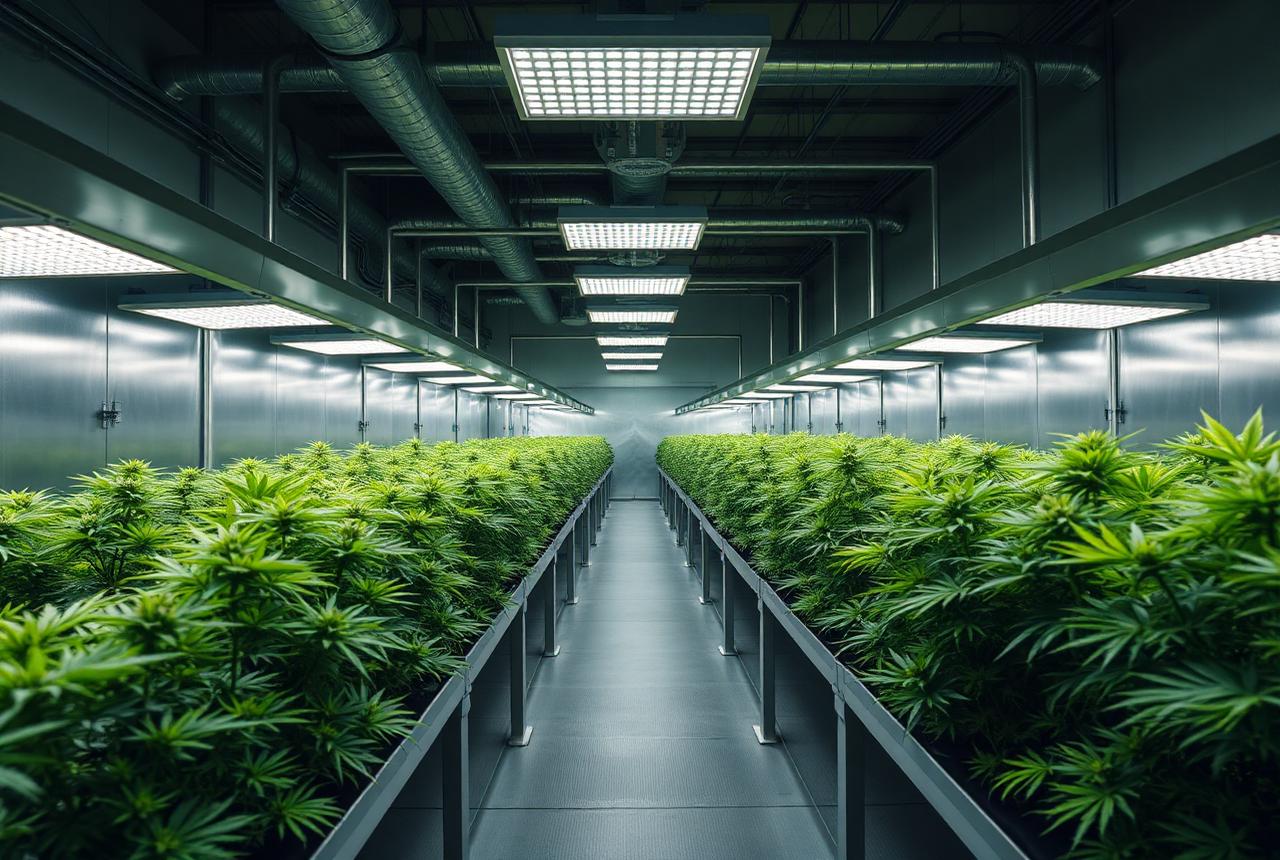
Cannabis Cultivation Accounting for Oklahoma Growers
Cultivation accounting differs from ordinary service-business bookkeeping because a grow produces a physical product over a production cycle. A consulting firm bills hours and records the related costs in the same period. A cultivator spends money on labor, nutrients, growing media, electricity, water, rent and equipment for weeks or months before a single package is available to sell. Those costs have to be captured, organized and related to the production they belong to, or the financial statements will show expense and revenue landing in unrelated periods.
The accounting also has to handle the physical reality of the operation: product moves through vegetative and flowering stages, gets harvested, dried, cured and packaged, and some of it is destroyed as waste along the way. Each of those events has a financial consequence. Direct costs such as cultivation labor and production inputs behave differently from indirect costs such as administrative salaries or general overhead, and both differ again from capital spending on lighting, HVAC or facility improvements.
- Production cycles that span multiple accounting periods
- Direct production costs including cultivation labor and inputs
- Indirect and general costs that support but do not directly produce
- Facility costs including rent, utilities, repairs and maintenance
- Equipment purchases, useful lives and ongoing maintenance
- Work in process while product is still in production
- Harvested and finished inventory available for sale or transfer
- Waste, destruction and inventory adjustments
- Yield and production volume relative to costs incurred
- Cost of goods sold and the gross margin it produces
How any specific cost is classified for accounting or tax purposes depends on applicable standards, applicable tax rules and the facts of the business. This page describes the mechanics of the work rather than prescribing a treatment for every cost.
Accounting for Cannabis Growers
Grower accounting exists to answer questions owners actually ask. What does it cost us to produce? Where is the money going? How much cash does a cycle consume before it returns anything? Are margins improving or eroding? Those questions cannot be answered from a bank balance or a revenue figure, and they cannot be answered from books where every cost lands in a handful of generic expense accounts.
Marijuana grower accounting done well produces a repeatable monthly picture: costs coded consistently, inventory supported by production records, COGS derived from real balances, and a comparison between periods that reflects operational change rather than bookkeeping noise. When operating results move, management should be able to point at the reason.
What production costs
Cost visibility by category and by cycle, so labor, inputs, utilities and facility costs are distinguishable rather than blended together.
Where money is spent
Vendor and category detail that shows which parts of the operation are absorbing spending as volume changes.
How inventory moves
A record of production activity flowing into inventory and out through sales, transfers, waste and adjustments.
How much cash production consumes
The timing gap between spending on a cycle and receiving revenue from the product it eventually yields.
Whether margins are improving
Gross margin tracked across periods on a consistent basis, so changes reflect operations rather than inconsistent costing.
How results change over time
Period-over-period comparison of revenue, production costs, waste, yield and operating expenses.
Cannabis Cultivation Cost Accounting
Cost accounting is the core of cultivation accounting. It means identifying the costs a grow incurs, capturing them in the accounting system with enough detail to be useful, and organizing them so they can be related to production. Without it, a cultivation operation has an income statement but no understanding of its own economics.
Cost categories a cultivation operation may need to track include:
- Direct cultivation labor across vegetative, flowering and harvest work
- Growing media, soil, substrate and related materials
- Nutrients, amendments and other cultivation inputs
- Utilities including electricity, water, gas and related facility usage
- Facility costs such as rent, repairs, maintenance and insurance
- Production supplies and consumables
- Testing costs where applicable to the operation
- Harvest, drying, curing and post-harvest handling costs
- Packaging materials where the cultivator packages product
- Equipment-related costs including maintenance and depreciation
- Supervision and production management time
- Other costs directly connected to producing the crop
Cultivation cost accounting overlaps heavily with our broader inventory and cost accounting work, which covers valuation methodology and COGS support across all cannabis business types.
Find Out What Your Production Actually Costs
Call to talk through how your cultivation costs are currently captured, or schedule a consultation to review your production cost structure.
Understanding the Cost of a Cannabis Harvest
Most growers can describe their harvest in physical terms long before they can describe it in financial terms. Understanding the economic cost of a harvest means connecting everything consumed during the cycle to what the cycle produced. That connection is what turns a production report into a management tool.
- Labor hours across the full cycle, including harvest and post-harvest work
- Inputs consumed such as nutrients, media and supplies
- Utilities used to run lighting, climate control and irrigation
- Facility costs allocated to the space and duration involved
- Equipment costs including maintenance and depreciation
- Waste and product loss occurring during the cycle
- Yield produced and its quality distribution where relevant
- Total production volume and harvest frequency
Small changes in these inputs move unit economics substantially. A cycle that takes longer, a room that yields less, an increase in utility rates, or additional labor hours all raise the cost carried by each unit produced. Because those effects compound, growers who track them can see a problem forming a cycle or two before it shows up in the annual results. We do not publish per-pound or per-plant benchmarks; the useful comparison is your own operation against its own history.
Cannabis Cultivation Inventory Accounting
Inventory accounting is where production activity becomes a balance sheet number. Costs incurred during production accumulate, product progresses through the grow, harvested material is weighed and recorded, and eventually finished inventory is available for sale or transfer. Each of those steps should be reflected in the accounting records rather than reconstructed at year-end.
- 01Production inputs purchased and recorded
- 02Costs accumulate against product in production
- 03Harvest recorded with quantities from production records
- 04Post-harvest processing costs added where applicable
- 05Finished inventory recognized and available for sale or transfer
- 06Sales, transfers, waste and adjustments recorded as they occur
- 07Ending inventory supported by counts and production records
- 08Cost of goods sold derived from the movement, not estimated
The accounting treatment behind each step is not one-size-fits-all, and oversimplifying it is one of the more common sources of unreliable financial statements in cultivation businesses. Detailed valuation and COGS methodology is covered on our inventory and cost accounting page.
Get Inventory Records That Support Your Financials
Call to discuss your current inventory records, or schedule a consultation to review how production flows into your books.
Work-in-Process Accounting for Cannabis Cultivation
A cultivation operation incurs cost before it has anything to sell. At any period end, there is product in the ground, in flower, drying or curing, with real cost already attached to it. Work-in-process accounting is the practice of recognizing that in-progress production carries value and cost rather than treating everything spent as an immediate expense.
- Production stages the operation actually runs and how long each takes
- Costs accumulated against product still in production at period end
- Labor applied during each stage of the cycle
- Inputs and supplies consumed before harvest
- Harvest and post-harvest processing that continues after cutting
- Period-end determination of what remains in process
- Transfer of accumulated cost when product becomes finished inventory
There is no single universal WIP methodology for cultivation. Appropriate treatment depends on the size and structure of the business, the systems available to track production, and applicable accounting and tax requirements. What matters is that the approach is defensible, applied consistently between periods, and supported by production records rather than assumption.
Cannabis Cultivation COGS Accounting
Cost of goods sold for a cultivator reflects the cost of the product actually sold in a period. Conceptually it moves through beginning inventory, plus purchases and production costs added during the period, less ending inventory. In practice the output is only as good as the inputs.
- 01Beginning inventory balance carried from the prior period
- 02Production activity and costs added during the period
- 03Purchases of inputs, supplies and materials
- 04Cost accumulation against production in process
- 05Transfers of completed product into finished inventory
- 06Ending inventory supported by counts and records
- 07Cost of goods sold for the period
- 08Gross margin measured against revenue
When inventory records are weak, COGS becomes a plug figure and gross margin swings from month to month for reasons nobody can explain. That instability is almost always an inventory problem rather than an operations problem. Fixing the underlying records usually resolves the reporting volatility as well.
Determinations about what belongs in cost of goods sold are a facts-and-circumstances analysis under applicable accounting and tax rules. This page does not advocate reclassification strategies; federal tax treatment is addressed on our 280E tax compliance page.
Cannabis Cultivation Labor Accounting
Labor is usually the largest controllable cost in a cultivation operation, and it is also the cost most often recorded in a way that makes it impossible to analyze. When all wages hit a single payroll expense account, there is no way to distinguish cultivation work from administrative time, or to see how harvest labor moves with volume.
- Cultivation labor across planting, feeding, maintenance and plant care
- Harvest labor including cutting, trimming and processing work
- Post-harvest handling such as drying, curing and packaging
- Production supervision and grow management time
- Administrative, sales and general management labor
- Payroll records that support how each category is coded
- Department or class coding in the accounting system
- Time tracking where practical for the size of the operation
- Labor-cost analysis relative to production volume and yield
Any labor classification should be supported by actual facts and records. Coding a percentage of payroll to production because it seems reasonable is not the same as coding it based on what employees actually did. Payroll processing and the mechanics behind it are covered on our cannabis payroll page.
Cannabis Cultivation Payroll
Payroll and cultivation accounting meet at the general ledger. Each pay run has to land in the accounting system with the right department detail, employer costs included, so labor reporting and production-cost analysis both have something real to work from. Where that connection is loose, labor analysis becomes guesswork and cash planning loses one of its largest and most predictable outflows.
- Payroll processing recorded into the general ledger each cycle
- Department or production coding carried through from payroll to accounting
- Employer payroll costs captured alongside gross wages
- Labor reporting that management can compare across periods
- Cash planning for each pay date as a fixed obligation
- Payroll balances reconciled as part of the month-end close
Full payroll scope, including processing and reporting coordination, lives on the cannabis payroll page.
Cultivation Supplies and Production Inputs
Input spending is easy to lose track of because it arrives continuously in small amounts from many vendors. Over a year it is rarely small. Accounting visibility here means coding purchases so they can be analyzed by category and compared against production rather than disappearing into a general supplies account.
- Growing media, soil and substrate purchases
- Nutrients, amendments and feeding program inputs
- General cultivation supplies and consumables
- Packaging materials where the cultivator packages product
- Testing costs where applicable to the operation
- Utilities consumed by cultivation activity
- Replacement parts and small tools used in production
The purpose of this detail is financial visibility and vendor analysis. Whether a particular input is inventoriable or expensed is a separate determination made under applicable accounting and tax rules.
Cannabis Cultivation Equipment Accounting
Cultivation is equipment-intensive, and equipment spending is where fixed-asset records most often fall apart. Purchases get expensed inconsistently, assets that were replaced stay on the schedule, and depreciation stops matching reality.
Lighting
Fixtures, controls and replacements, often purchased in significant quantities during build-out or upgrades.
HVAC and environmental controls
Climate systems, dehumidification and monitoring equipment that carry both capital cost and ongoing maintenance.
Irrigation and fertigation
Water delivery, dosing and related systems installed as part of the production infrastructure.
Production equipment
Trimming, drying, handling and processing equipment used across the production cycle.
Security equipment
Cameras, access control and related systems where relevant to the facility.
Facility improvements
Build-out and improvement spending on the growing space itself, tracked separately from movable equipment.
Accounting considerations include purchase price and related costs, expected useful life, depreciation method, and whether a given expenditure is a repair or an improvement. Those determinations depend on applicable accounting and tax rules and the facts involved, so this page describes the considerations rather than issuing blanket capitalization thresholds. What every operation needs regardless is a fixed-asset schedule that matches what is physically in the building.
Facility Costs and Cultivation Accounting
Cultivation facilities carry substantial fixed costs that continue whether a room is running at capacity or sitting empty between cycles. Understanding those costs and how they behave is central to understanding production economics.
- Rent or lease costs for the production facility
- Utilities including electricity, water and gas
- Repairs and ongoing maintenance
- Insurance related to the facility and its contents
- Facility improvements and build-out spending
- Property-related costs and associated charges
- Security and monitoring costs tied to the premises
Because these costs are largely fixed in the short term, underutilized capacity is expensive. Management that can see facility cost against production output is in a better position to evaluate whether adding a room, changing cycle timing or adjusting capacity makes financial sense.
Cannabis Yield and Cost Analysis
Yield analysis connects the operational side of the grow with the financial side. Production teams already track volume, cycle times and quality. Accounting adds the cost dimension, which turns those metrics into economics.
- Production volume by cycle, room or facility
- Harvest yield relative to space, plants or cycle length
- Total production costs incurred during the cycle
- Waste and loss occurring across the cycle
- Labor hours and labor cost applied
- Facility and utility costs attributable to the period
- Inventory output added to finished goods
- Comparison across production periods on a consistent basis
The value comes from comparison over time. When one cycle costs meaningfully more than the last for the same output, the analysis narrows the search to the categories that moved. We do not fabricate yield benchmarks; the meaningful baseline is your own historical performance.
Cannabis Waste and Inventory Adjustments
Waste is a normal part of cultivation, but unrecorded waste is a reporting problem. Product that is damaged, destroyed or lost still carries accumulated cost, and if that cost is not removed from inventory the balance sheet overstates what the business holds.
- Waste generated during cultivation and harvest
- Damaged product removed from saleable inventory
- Destroyed product and the records supporting destruction
- Production loss occurring between stages
- Inventory adjustments recorded in the accounting system
- Differences identified during physical counts
- Documentation explaining why each adjustment was made
Adjustments should be documented and reconciled as they occur rather than accumulating as unexplained differences. A pattern of recurring unexplained adjustments usually indicates a process issue somewhere upstream, and the accounting records are often the first place it becomes visible.
Seed-to-Sale Reconciliation for Cannabis Cultivators
A cultivation operation maintains two parallel records of the same activity: the seed-to-sale tracking system records plants, packages, harvests, transfers and waste, while the accounting system records the financial value of that movement. When the two disagree, one of them is wrong, and both are being relied on.
- Harvests recorded in tracking compared with inventory additions in accounting
- Package and transfer activity compared with inventory movement
- Waste and destruction events reflected in inventory adjustments
- Production records compared with cost accumulation
- General ledger inventory balances compared with tracking balances
- Physical counts compared against both systems
- Differences investigated to their source rather than written off
Cultivation-side reconciliation is part of this service. The broader reconciliation practice, covering all license types and full system-to-ledger workflows, is on our METRC reconciliation page.
Physical Inventory and Cultivation Accounting
Physical counts are the check on everything else. Counting what is actually on hand and comparing it to what the operational and financial records say should be on hand is how inventory errors get caught before they compound across periods.
- Cutoff discipline so activity lands in the correct period
- Transfers in transit at the time of the count
- Harvests completed near the count date
- Adjustments recorded before or after the count
- Waste events occurring during the count period
- Production stage changes affecting what is counted
- Count differences documented and investigated
Unexplained discrepancies should be investigated rather than absorbed. Repeated small differences that nobody traces eventually become a large inventory balance that cannot be supported.
Cannabis Cultivation Bookkeeping
Everything above depends on ongoing bookkeeping. Cost accounting, inventory analysis and financial reporting all draw from the same underlying record, and none of them work when the close is months behind or the bank accounts have not been reconciled.
- Purchases of inputs, supplies and materials recorded with vendor detail
- Payroll entries posted with department coding
- Inventory activity recorded as production moves
- Vendor bills entered and tracked against payment
- Bank and card reconciliation performed each period
- Equipment purchases recorded to fixed assets
- Revenue recorded from sales and wholesale transfers
- Journal entries supporting inventory, COGS and accruals
- A month-end close routine performed on a schedule
General cannabis bookkeeping scope, including close procedures across all business types, is covered on our cannabis bookkeeping page.
Cannabis Cultivation Financial Reporting
Reporting for a cultivator should say something about production, not just about revenue and expenses. Standard financial statements matter, but management also needs schedules that connect financial results to what happened in the grow.
- Income statement with production costs presented usefully
- Balance sheet including supported inventory and fixed-asset balances
- Cash flow reporting reflecting production spending
- Inventory schedules by stage or category
- COGS detail supporting the reported figure
- Gross margin tracked across periods
- Production-cost analysis relative to output
- Budget-versus-actual comparison where a budget exists
- Department or facility-level reporting where relevant
Reporting design and management-reporting packages are covered further on our financial reporting page.
Cannabis Cultivation Cash Flow Planning
Cultivation creates a structural timing gap. Money goes out for labor, inputs, utilities and facility costs throughout the cycle, and comes back only after harvested product is finished, sold and collected. A grower can be building inventory value steadily while the bank balance falls.
- Production expenses incurred throughout the cycle
- Labor costs on a fixed pay schedule regardless of harvest timing
- Input and supply purchases ahead of production need
- Utilities running continuously across the facility
- Facility costs due whether or not a cycle is finishing
- Harvest timing relative to when revenue is received
- Inventory holding period before sale
- Receivables where product is sold on terms
Forecasting that gap is what keeps it from becoming an emergency. Full forecasting and working-capital scope is on our cash flow planning page.
Budgeting and Forecasting for Cannabis Cultivators
A cultivation budget is a production plan expressed in dollars. It starts from expected output and works through what producing that output requires, then tests whether the resulting cash position holds.
- Expected production volume by cycle and facility
- Expected sales volume and pricing assumptions
- Labor requirements and associated payroll cost
- Input and supply spending tied to production plans
- Utilities and facility costs at planned capacity
- Equipment purchases and replacement expectations
- Inventory levels required to support sales
- Tax-related cash requirements
- Capital expenditures for expansion or upgrades
Where broader financial modeling, scenario planning or ongoing management support is appropriate, our fractional CFO service covers that scope.
Cannabis Cultivation Profitability Analysis
Revenue growth in cultivation can coexist with declining profitability. Producing more at a higher unit cost, or selling into softer pricing, can raise the top line while margins compress. Profitability analysis looks past revenue to what the operation retains.
- Revenue by product, channel or customer where relevant
- Production costs incurred to generate that revenue
- Gross profit and gross margin measured consistently
- Operating expenses below the gross margin line
- Waste and loss and their effect on unit cost
- Yield relative to space, labor and inputs consumed
- Labor cost as a proportion of production value
- Facility costs against capacity utilization
- Inventory levels and holding cost
- Pricing relative to production cost
Broader profitability and growth advisory is covered on our business advisory page.
Cannabis Cultivation and IRC Section 280E
Cultivation cost accounting intersects directly with federal cannabis tax treatment. Federal cannabis scheduling and the application of IRC Section 280E are evolving areas that require analysis based on current law, the specific business, the products involved and the applicable tax period.
What does not change is the importance of the underlying records. Determinations about inventory, cost of goods sold and tax treatment rest on documented accounting: cost records that show what was incurred, inventory records that show what was produced and held, and payroll records that support how labor was classified. Operations with accurate, contemporaneous records are in a better position under any interpretation than operations reconstructing figures after the fact.
Federal tax treatment analysis is handled through our 280E tax compliance service.
Cannabis Cultivation Tax Preparation
Year-round cultivation accounting makes tax preparation a compilation exercise rather than a reconstruction project. When inventory, COGS, fixed assets and payroll are already supported, the return is built from records that exist instead of estimates assembled under deadline.
- Inventory balances supported by counts and production records
- COGS schedules that tie to the general ledger
- Fixed-asset and depreciation schedules kept current
- Payroll records reconciled to filings
- Revenue records reconciled across systems
- Operating expenses coded consistently through the year
- Supporting schedules prepared alongside the close
- Reconciliations completed before year-end rather than after
Return preparation itself is handled through our cannabis tax preparation service.
Multi-Facility Cannabis Cultivation Accounting
Operators running more than one grow need visibility at two levels: what each facility is doing on its own, and what the business looks like consolidated. Neither view alone is sufficient for management decisions.
- Facility-level accounting with costs tracked by location
- Production costs attributable to each site
- Inventory transfers between facilities recorded with cost
- Shared expenses allocated on a defensible basis
- Equipment and fixed assets tracked by location
- Labor coded to the facility where the work occurred
- Consolidated financial statements across the group
- Location-level profitability comparison
Transfers deserve particular attention. When product moves between facilities without cost following it, both locations report distorted margins and consolidated inventory stops reconciling.
Vertically Integrated Cannabis Accounting
Many Oklahoma operators combine cultivation with processing or retail. Vertical integration adds accounting complexity because product changes form and business function while remaining the same underlying inventory.
- Cultivation output transferred into processing or manufacturing
- Conversion costs added during manufacturing
- Finished product transferred into retail inventory
- Cost traceability maintained across each transfer
- Segment-level reporting for each business function
- Intercompany or interdepartmental activity eliminated in consolidation
- Seed-to-sale records reconciled across the full chain
Related work includes manufacturing accounting, dispensary accounting, METRC reconciliation and inventory and cost accounting.
Starting a Grow Business in Oklahoma
Businesses entering cultivation benefit from establishing sound financial systems early — a chart of accounts built for production, bookkeeping, payroll, inventory accounting, cost tracking, financial reporting, cash-flow planning and tax recordkeeping — rather than retrofitting them after the first harvest.
For the broader picture of starting a cannabis business in Oklahoma, our Oklahoma cannabis startup guide is the more complete resource. For context on cultivator businesses generally, see our cannabis cultivators industry page.
Accounting Systems for a New Cannabis Cultivation Business
The accounting decisions made in the first few months tend to persist. Setting up structure before volume arrives is considerably cheaper than reconstructing it later.
- Dedicated business banking separate from personal accounts
- Accounting software appropriate to a production business
- A chart of accounts that distinguishes production from overhead
- Payroll processes established before the first hires scale
- Inventory procedures covering harvest, transfer, waste and counts
- Production-cost tracking from the first cycle forward
- Fixed-asset records started at the first equipment purchase
- Month-end close procedures performed on a schedule
- Financial reporting that management actually reviews
- Tax documentation retained contemporaneously
This section covers accounting setup only. Licensing and regulatory steps are outside the scope of this service page.
Cultivation Accounting Cleanup
Many growers arrive with books that no longer describe the business. Cleanup work does not start with corrections; it starts with understanding what the existing records actually contain and where the discrepancies originated.
- Inventory balances that do not reconcile to production or tracking records
- COGS figures that appear unreliable or swing without explanation
- Old inventory balances carried forward with no support
- Production costs recorded without enough detail to analyze
- Payroll posted without department or production coding
- Incomplete or outdated equipment and fixed-asset records
- Seed-to-sale records and accounting that disagree
- Financial statements that cannot explain reported margins
- Historical journal entries that need review before they are relied on
Once the source of each problem is identified, corrections are made in an order that produces supportable statements rather than simply forcing balances to agree.
Common Cannabis Cultivation Accounting Problems
These are illustrative situations we encounter in cultivation engagements, not client statements or testimonials. They tend to point at specific, identifiable causes.
“We don’t know what it costs us to grow.”
Production costs are recorded but not organized in a way that relates them to output.
“Our inventory doesn’t match our books.”
Tracking and accounting have diverged, usually through unrecorded harvests, waste or transfers.
“Our COGS changes dramatically every month.”
Ending inventory is unsupported, so COGS absorbs whatever the balance sheet cannot explain.
“We don’t know whether production is profitable.”
Gross margin is not being measured consistently against production costs.
“Labor is all in one account.”
Payroll lacks department coding, so cultivation and administrative labor cannot be separated.
“We cannot explain inventory adjustments.”
Adjustments were recorded without documentation of what caused them.
“Seed-to-sale and accounting disagree.”
No routine reconciliation exists between the tracking system and the general ledger.
“Our fixed-asset records are messy.”
Equipment purchases were recorded inconsistently and the schedule no longer matches the facility.
“We’re producing more but cash is tighter.”
Growth is consuming working capital through inventory and inputs faster than sales return it.
“We can’t tell which facility performs.”
Costs are not tracked by location, so consolidated statements hide site-level results.
Talk Through What Is Actually Wrong With Your Books
Call to describe what you are seeing in your cultivation financials, or schedule a consultation to review your records and where the discrepancies start.
What We Review During a Cultivation Accounting Engagement
Scope varies with the size of the operation and the condition of the records, but the review generally covers the documents that explain how production becomes financial results.
- General ledger and trial balance
- Financial statements for recent periods
- Bank and card statements with reconciliations
- Vendor invoices for inputs, supplies and services
- Payroll reports and how they are coded
- Inventory reports from the accounting system
- Seed-to-sale reports covering harvests, transfers and waste
- Production and cultivation records
- Harvest records with quantities and dates
- Physical count documentation
- Equipment purchase records
- Fixed-asset and depreciation schedules
- Prior tax records and supporting schedules
- Existing COGS calculations and their support
- Any reconciliations currently being performed
Oklahoma Cannabis Cultivation Accounting
We work with Oklahoma cannabis growers and cultivation businesses across the state, from single-room indoor operations to larger multi-facility groups and vertically integrated operators who grow, process and sell. Oklahoma cultivators tend to operate in a competitive market where production cost discipline matters, which makes accurate cultivation accounting a practical business need rather than an administrative one.
The accounting issues Oklahoma marijuana growers bring to us are consistent: inventory that does not reconcile, production costs that cannot be analyzed, seed-to-sale records that disagree with the books, labor recorded without useful detail, and financial statements that cannot explain why margins moved. Those are solvable problems, and solving them generally improves both management visibility and tax-time readiness.
We serve Oklahoma cannabis operators statewide, including Oklahoma City, Tulsa, Norman, Broken Arrow, Edmond, Lawton and Durant, and work remotely with growers throughout the state.
Questions to Ask a Cannabis Cultivation Accountant
If you are evaluating accounting support for a grow, these questions surface whether a provider understands production businesses or is applying general small-business bookkeeping to a cultivation operation.
- How do you account for cultivation inventory?
- How do you approach production-cost accounting?
- How do you reconcile seed-to-sale records with accounting?
- How are cultivation and harvest labor costs tracked?
- How do you handle equipment and fixed-asset accounting?
- How do you support the COGS figure on our financial statements?
- Can you help clean up historical inventory problems?
- Can you support a multi-facility cultivation operation?
- How does cultivation accounting interact with 280E?
- How do you help management understand cultivation profitability?
Cannabis Cultivation Accounting FAQs
- What is cannabis cultivation accounting?
- Cannabis cultivation accounting is the accounting work built around a growing operation: tracking production costs, cultivation labor, inputs and supplies, facility and equipment costs, movement of product through production into inventory, waste and adjustments, cost of goods sold, and the financial reporting that ties those pieces together. It combines ordinary bookkeeping with production and inventory cost accounting so management can see what cultivation actually costs and how those costs flow into margins.
- How is grower accounting different from ordinary bookkeeping?
- Ordinary bookkeeping for a service business records revenue and expenses in the period they occur. A cultivation business produces a physical product over a multi-week or multi-month cycle, which means costs accumulate against production before anything is sold. Grower accounting has to handle production cost accumulation, inventory, waste, yield and the transfer of costs into cost of goods sold, none of which arise in a straightforward service business.
- How do cannabis cultivators account for inventory?
- Inventory accounting for a cultivator generally follows product through production: inputs and production costs accumulate, product moves through growth and harvest stages, and eventually finished inventory is available for sale or transfer. Ending inventory balances should be supported by production and count records rather than estimated. The specific method used depends on the business, its systems, applicable accounting standards and applicable tax rules, so it is determined case by case rather than by a universal template.
- What is cultivation cost accounting?
- Cultivation cost accounting is the discipline of identifying, capturing and organizing the costs associated with producing cannabis, then relating them to production output. It typically involves separating direct production costs from indirect and general operating costs, coding costs consistently, and analyzing them against harvest volume so management can compare production periods on a like-for-like basis.
- How is COGS calculated for a cannabis cultivation business?
- Conceptually, cost of goods sold reflects beginning inventory plus costs added during the period, less ending inventory. In practice the reliability of that calculation depends entirely on the inventory records supporting it. If ending inventory is unsupported, or production costs are inconsistently captured, the resulting COGS and gross margin figures will move erratically from month to month. Determining what is properly included is a facts-and-circumstances analysis under applicable accounting and tax rules.
- How should cultivation labor be tracked?
- Labor is often the largest single cost in a cultivation operation, and recording all of it in one payroll account removes any ability to analyze it. A more useful approach codes payroll by function or department, supported by actual time records where practical, so cultivation labor, harvest labor, post-harvest work, supervision and administrative time can be distinguished. Any classification should be supported by the underlying records rather than by assumption.
- How do seed-to-sale records connect with accounting?
- Seed-to-sale systems track physical plants, packages, transfers and waste. Accounting tracks the financial value of that same activity. The two should tell a consistent story: harvests, transfers, adjustments and destruction recorded in the tracking system should be reflected in the accounting inventory records, and differences should be explained rather than left standing.
- Can you help reconcile cultivation inventory?
- Yes. Reconciliation work generally starts by comparing production and tracking records with the inventory balances in the general ledger, identifying where the two diverge, and tracing the difference to its source, such as unrecorded harvests, missing waste entries, cutoff issues, transfer timing or costing errors. The goal is a supported inventory balance and a repeatable process going forward.
- Can you help clean up historical cultivation books?
- Cleanup engagements are common for growers whose records have fallen behind or whose inventory balances no longer make sense. The work usually begins with understanding what the current records contain, reconciling bank and vendor activity, reviewing payroll coding, examining inventory and fixed-asset balances, and then correcting entries in an order that leaves supportable financial statements. Scope depends on how far back the issues run.
- How does 280E affect cannabis cultivation accounting?
- Federal cannabis scheduling and the application of IRC Section 280E are evolving areas that require analysis based on current law, the specific business, the products involved and the applicable tax period. What is consistent is that inventory and cost records matter: determinations about inventory, cost of goods sold and tax treatment rest on documented accounting, so cultivation operations benefit from accurate, well-supported records regardless of how the law develops.
- Do you work with multi-facility cultivators?
- Yes. Multi-facility operations generally need both facility-level visibility and consolidated financial statements, which means production costs, inventory, labor, equipment and shared expenses have to be tracked in a way that supports reporting at each level. Inventory transfers between facilities also need to be recorded so cost stays traceable.
- Can you help someone starting a grow business in Oklahoma?
- Yes, on the accounting side. A new cultivation business benefits from setting up dedicated business banking, accounting software, a chart of accounts suited to production, payroll processes, inventory procedures, production-cost tracking, fixed-asset records and a month-end close routine before volume builds up. For broader background on getting a cannabis business off the ground in Oklahoma, our Oklahoma cannabis startup guide covers the wider startup picture.
Related Services
Inventory & Cost Accounting
Inventory valuation, cost accounting methodology and COGS support.
Read moreMETRC Reconciliation
Seed-to-sale records reconciled with inventory and the general ledger.
Read moreCannabis Bookkeeping
Ongoing bookkeeping and month-end close for cannabis operators.
Read moreCannabis Payroll
Payroll processing and the accounting behind cultivation labor.
Read moreCash Flow Planning
Forecasting the gap between production spending and harvest revenue.
Read moreFractional CFO
Budgeting, forecasting and senior financial support for growers.
Read more280E Tax Compliance
Federal income tax treatment analyzed under current law.
Read moreCannabis Tax Preparation
Return preparation built from supported inventory and COGS records.
Read moreManufacturing Accounting
Conversion costing for processors and vertically integrated operators.
Read moreFinancial Reporting
Management reporting including inventory, COGS and margin detail.
Read moreBusiness Advisory
Profitability, margin and growth advisory for cultivation operators.
Read moreDispensary Accounting
Retail accounting for vertically integrated cultivation groups.
Read moreIndustry and Guides
Starting a Cannabis Grow in Oklahoma
Financial planning guide for prospective Oklahoma cultivation operators.
Read moreCannabis Cultivators
Industry overview of accounting needs for cannabis cultivation businesses.
Read moreCannabis Startup Guide
Starting a cannabis business in Oklahoma, including grow operations.
Read moreCultivation Accounting Guide
Reference walkthrough of cultivation accounting concepts.
Read moreGet Accounting Help for Your Oklahoma Cannabis Cultivation Business
If you need clearer visibility into production costs, inventory, COGS, cultivation labor, cash flow, financial reporting, seed-to-sale reconciliation or overall cultivation profitability, call to talk it through or schedule a consultation to review your books and production records.