Oklahoma Cannabis Inventory Accounting
Cannabis Inventory & Cost Accounting in Oklahoma
Accurate cannabis inventory accounting connects what happens on the floor — purchasing, production, transfers, adjustments and sales — to product costs, cost of goods sold and the general ledger. We help Oklahoma dispensaries, cultivators, processors and manufacturers build inventory and costing records that reconcile and can be explained.
- Inventory
- Balances that tie
- Costing
- Documented method
- COGS
- Supported build
- Reconciliation
- Monthly routine
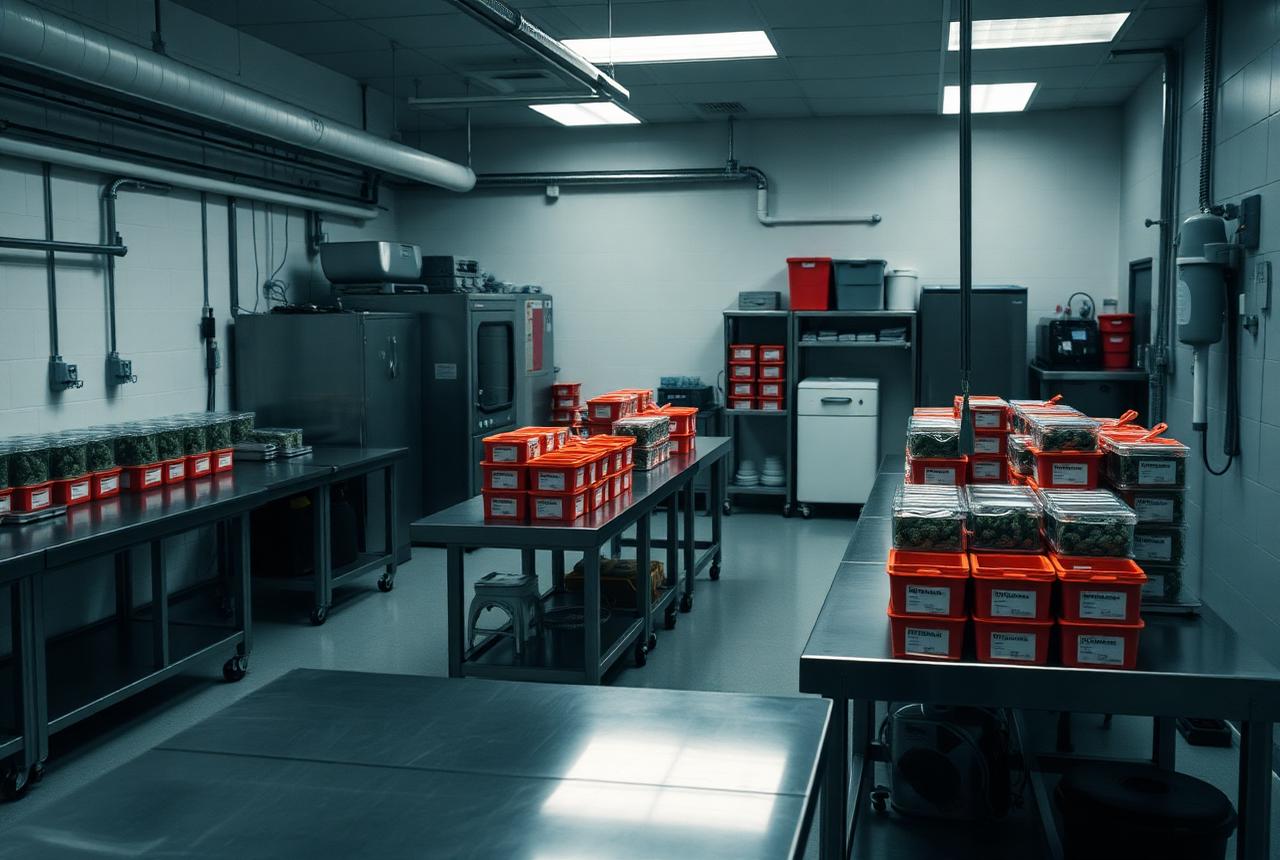
Why Inventory Accounting Matters So Much in Cannabis
In most cannabis businesses, inventory is the largest asset on the balance sheet and the largest single driver of reported profit. Capital sits in flower, concentrate, edibles, packaging, raw materials and work in process, and it moves constantly through purchasing, production, transfers, adjustments, waste, returns and sales. When that movement is not accounted for accurately, the financial statements stop describing the business.
The complexity is structural rather than optional. A single operator may hold product at several stages at once, across multiple categories, in multiple units of measure, at different cost bases, in more than one location. Labor and production costs attach to some of that product and not to other parts of it. Packaging is consumed as inventory converts. Shrinkage and waste occur and have to be recorded rather than discovered later.
There is also a distinction worth stating plainly: operational inventory tracking and financial inventory accounting are related but different. Operational systems answer how much product exists and where it is. Accounting answers what that product cost, what it is worth on the balance sheet, and what should be charged to cost of goods sold this period. An operator can have quantities that are perfectly tracked and still have inventory accounting that does not reconcile — and the tax and reporting consequences follow the accounting, not the count.
Cannabis Inventory Accounting for Oklahoma Businesses
Professional inventory accounting is a repeatable period-end discipline, not a year-end scramble. The core structure is straightforward even when the operation is not: what you started with, what came in, what was produced, what moved, what was adjusted, and what remains.
- 01Beginning inventory — the prior period's ending balance, carried forward and agreed
- 02Purchases — vendor invoices and receiving recorded into inventory, not expense
- 03Production — materials, labor and overhead accumulated into work in process
- 04Transfers — movement between locations, licenses or stages recorded at cost
- 05Adjustments — waste, shrinkage, damage, returns and corrections documented
- 06Ending inventory — valued at period end using a consistent methodology
- 07COGS — relieved from inventory as product sells, with supporting schedules
- 08Reconciliation — subledger, operational records and general ledger agreed
Supporting schedules are what make the balances defensible. An inventory number on the balance sheet should be traceable to a schedule that shows quantities, unit costs and valuation by category or location, and that schedule should tie to the ledger without an unexplained difference.
Cannabis Cost Accounting
Cost accounting answers a question most operators think they already know the answer to: what does this product actually cost? For a retailer that means landed purchase cost with any directly attributable costs. For a cultivator, processor or manufacturer, it means accumulating the costs of production and allocating them to output in a way that is reasonable, documented and applied the same way each period.
Direct costs
Costs that attach clearly to product: purchased inventory, raw materials, packaging consumed at production, and labor performing production activity.
Indirect and production overhead
Costs that support production but are not traceable to a single unit — utilities in production space, production supplies, equipment costs, production supervision.
Allocation methodology
How pooled costs are distributed to output: by weight, by unit, by batch, by run, by time, or another basis appropriate to the operation and documented in writing.
Cost centers
Grouping activity so costs can be accumulated where they occur — cultivation rooms, extraction, kitchen, packaging, retail — before allocation.
Work in process and finished goods
Cost accumulates as product progresses, so stage matters. WIP holds cost for incomplete product; finished goods hold fully burdened, sellable cost.
Margin analysis
Once costs are accurate, gross margin by product, category, batch or location becomes usable for pricing, purchasing and production decisions.
No single method is universally appropriate. The right approach depends on license type, product mix, production complexity, the systems in place and applicable accounting and tax requirements. What matters most is that the methodology is deliberate, documented, reasonable for the operation, and applied consistently rather than reinvented each period.
Cannabis Inventory Accounting and COGS
Cost of goods sold is not an independent number to be estimated; it is an output of inventory accounting. Costs are capitalized into inventory as product is purchased or produced, and released to COGS as that product is sold.
The consequence is direct. Overstate ending inventory and COGS falls while profit rises; understate it and the opposite happens. Errors also carry forward, because this period's ending balance is next period's beginning balance. Unreliable inventory accounting distorts gross profit, net income, product and category margins, tax reporting and every management decision that depends on those numbers.
Supporting documentation and consistency are what turn a COGS figure into a supportable one: cost records behind unit costs, schedules behind balances, documented adjustments, and the same methodology period over period.
Inventory Accounting and IRC Section 280E
Inventory and cost of goods sold receive particular attention in cannabis accounting, which is why cost accumulation, cost classification, documentation and consistent accounting practices matter more here than in most industries. Careful inventory accounting is what makes a COGS position explainable when a return is prepared or reviewed.
Two cautions are worth stating. Inventory accounting is not a mechanism for relabeling operating expenses, and accurate costing is not a guarantee of any specific tax result. What good inventory accounting does provide is a defensible record of what was purchased or produced, what it cost, how those costs were classified and why. The detailed tax analysis belongs on the Oklahoma 280E tax compliance and planning page, with background reading in the 280E explained guide.
Dispensary Inventory Accounting
Retail inventory accounting looks simple and frequently is not. Product arrives on vendor invoices, is received into the point-of-sale system, is sold in small units at high volume, and is adjusted for returns, damage, samples and shrinkage along the way. Each of those events has an accounting consequence.
- Vendor invoices matched to receiving and recorded into inventory at cost
- Unit costs maintained by SKU, including packaging or freight where attributable
- Transfers between locations or from affiliated licenses recorded at cost
- Returns, discounts and voids reflected consistently in both POS and accounting
- Damaged, expired and destroyed product recorded as documented adjustments
- Shrinkage identified through counts and investigated rather than absorbed
- COGS relieved as product sells, with margins reviewed by category
- Inventory subledger reconciled to the general ledger every month
This is why a dispensary can have accurate operational quantities and still have an accounting problem: quantities on hand can be right while unit costs, capitalization, adjustments and ledger balances are not. Broader retail financial work — sales and cash reconciliation, statements, close — lives on the dispensary accounting page.
Cultivation Cost Accounting
Cultivation costing follows the production cycle rather than the calendar. Costs accumulate across weeks of growth, then attach to harvested output whose weight is not known until it exists. That timing mismatch is the central accounting challenge.
- Direct materials — nutrients, media, plant material and consumables used in production
- Production labor — cultivation, trimming, harvest and related work, captured by activity
- Supplies and production overhead — utilities in grow space, equipment, environmental systems
- Work in process — cost carried on living crops until harvest completes
- Harvested and finished inventory — costed output moved to sellable stages
- Yield and waste — recorded so cost per unit reflects what was actually produced
- Cost per gram or per pound — computed from a documented allocation basis
The goal is a defensible cost methodology, not an aggressive one. Consistent capture of labor and overhead, honest treatment of yield and waste, and documented allocation produce a cost per unit that supports pricing and production decisions. Cycle-specific accounting support is covered on the cultivation accounting page.
Cannabis Manufacturing & Processing Cost Accounting
Processing and manufacturing convert inputs into different products, so cost has to follow the conversion. Raw material enters work in process, conversion costs are added, and finished goods emerge at a burdened cost that depends heavily on yield.
- 01Raw material issued to production and removed from raw inventory
- 02Work in process accumulates material, production labor and overhead
- 03Production run completed and output quantities recorded
- 04Yield and waste captured against the run
- 05Packaging costs applied as product is packaged
- 06Finished goods recorded at fully burdened unit cost
- 07COGS relieved on sale, with margin reviewed by product
Weak cost accounting is especially misleading here. If conversion costs are expensed rather than accumulated, or allocated across products on a basis that does not reflect production reality, some products look far more profitable than they are while others look worse. Product-level decisions made on those numbers compound the error. Related support is on the manufacturing accounting page.
Inventory Reconciliation
Reconciliation is where inventory accounting either holds together or does not. The objective is agreement between independent record sets, with every difference explained by cause.
- Operational inventory records and subledgers
- Seed-to-sale records where applicable
- Purchasing, receiving and vendor invoice records
- Production, harvest and conversion records
- Physical count results
- Point-of-sale reporting where applicable
- Accounting software inventory and COGS activity
- General ledger inventory account balances
The discipline that matters is investigation. Forcing balances to match with an unexplained adjusting entry removes the symptom and keeps the problem; the same variance reappears the following month, usually larger. Differences should be categorized — timing, data entry, receiving, conversion, waste, posting — so the underlying process can be corrected. Ongoing reconciliation between operational and financial systems is handled through seed-to-sale reconciliation.
Seed-to-Sale Data vs. Financial Inventory Accounting
These two record sets are frequently confused, and the confusion causes real accounting problems. They should agree with one another, but they exist for different reasons.
Seed-to-sale / operational records
- Compliance and traceability oriented
- Tracks quantities, packages and movement
- Documents transfers, waste and adjustments
- Generally does not carry financial cost
- Not a valuation or general-ledger source
Financial inventory accounting
- Financial reporting and tax oriented
- Carries cost, valuation and capitalization
- Produces COGS and balance-sheet balances
- Supported by schedules and documentation
- Reconciles to the general ledger
Used well, operational data is one of the strongest reconciliation inputs available: movement, adjustments and waste events explain much of what happens to inventory value. Background on how the tracking system itself works is covered in the Metrc and seed-to-sale guide.
Physical Inventory Counts and Book-to-Actual Reconciliation
Periodic physical counts are what convert inventory accounting from theory into verified fact. The count itself is the easy part; the procedures around it determine whether the result is usable.
- Written count procedures, with counters independent of inventory adjustments
- Clear cutoff so receiving, transfers and sales land in the correct period
- Identification of unrecorded transactions before variances are calculated
- Damaged, expired and quarantined product identified rather than counted as sellable
- Waste and shrinkage documented with authorization
- In-transit transfers accounted for on both sides
- Variance analysis by category, location and cause
- Reconciliation documentation retained with the period's close file
Postponed reconciliation is the most expensive habit in inventory accounting. Small unexplained differences accumulate quietly, and after several periods they are no longer separable — the records needed to explain them have aged out, and the only remaining option is a large write-off nobody can support.
Cannabis Inventory Adjustments and Discrepancies
Most inventory differences trace to a short list of recurring causes. Naming the cause is what makes the fix durable.
- Timing differences between operational recording and accounting entry
- Receiving errors — quantities, costs or invoices recorded incorrectly
- Transfer errors between locations, licenses or stages
- Unit-of-measure problems, especially grams, ounces, pounds and each
- Waste and destruction recorded operationally but not in accounting
- Returns and exchanges handled inconsistently between POS and ledger
- Damaged or expired product left in inventory at full value
- Data-entry mistakes and duplicated entries
- POS differences between reported sales and inventory relief
- Production conversion issues where output is not costed correctly
- Undocumented adjustments made without support or authorization
- Accounting posting errors — wrong account, wrong period, wrong sign
Inventory Valuation and Accounting Methods
Valuation methodology affects reported financial results and can affect tax calculations, which is why it deserves a deliberate decision rather than a default setting in the accounting software.
- Consistency — the same method applied period over period unless a change is deliberate and documented
- Documentation — a written description of how costs are accumulated, allocated and valued
- Accounting method — appropriate to the business, its systems and applicable requirements
- Cost accumulation — which costs enter inventory and at what stage
- Allocation methodology — the basis used to distribute pooled production costs
- Period-end valuation — how remaining inventory is valued and supported at close
The appropriate methodology depends on the specific business and the accounting and tax requirements that apply to it, and it should be reviewed with your accounting and tax advisors rather than adopted from a general rule.
Cannabis Gross Margin and Product Profitability
Accurate costing pays for itself outside of compliance. Once unit costs are reliable, margin becomes a management tool rather than a guess.
- Gross margin by product, category, brand, batch and location
- Product profitability that reflects fully burdened cost, not invoice price alone
- Pricing decisions supported by real contribution rather than market feel
- Purchasing decisions informed by which SKUs actually earn shelf space
- Production decisions based on run economics, yield and conversion cost
- SKU and category analysis to prune underperforming inventory
- Budgeting built on cost behavior that has been observed rather than assumed
- Cash planning that recognizes how much capital inventory is holding
Forward-looking use of that data — modeling, scenario planning and margin strategy — is where fractional CFO advisory and cash flow planning typically pick up.
Inventory Accounting for Multi-Location Cannabis Operators
Complexity multiplies rather than adds when an operator runs several locations or combines license types. The accounting has to keep each location explainable while still consolidating into a coherent whole.
- Multiple dispensaries with separate inventory and count procedures
- Cultivation supplying retail, with transfers costed rather than estimated
- Manufacturing supplying retail or wholesale channels
- Intercompany activity recorded on both sides and eliminated where appropriate
- Transfers between licenses documented at a consistent cost basis
- Location-level reporting so margin problems can be isolated
- Central purchasing allocated to the locations that receive product
- Shared costs distributed on a documented, consistent basis
- Consolidated reporting that still reconciles to each entity's ledger
Consistent procedures across locations matter more than sophisticated ones. When each site records receiving, adjustments and counts the same way, consolidation is mechanical; when they do not, consolidated inventory becomes an estimate.
Cannabis Inventory Accounting Cleanup
A large share of inventory engagements begin with records that are already unreliable. Common signs include:
- Inventory on the books does not agree with operational records
- COGS looks unreasonable relative to sales, or swings without explanation
- Gross margins fluctuate period to period with no operational cause
- Old inventory balances sit on the balance sheet and never clear
- Seed-to-sale and accounting records disagree and nobody has reconciled them
- Physical counts reveal discrepancies that were never investigated
- Product costs are incomplete or missing for part of the catalog
- Production costs are captured inconsistently or not at all
- Prior bookkeeping expensed purchases instead of capitalizing inventory
- 01Diagnostic review of inventory and COGS account activity
- 02Assessment of source records — purchasing, production, POS, operational reports
- 03Determination of a supportable starting point and cost methodology
- 04Rebuild or correction of inventory balances where records allow
- 05Documented adjustments for differences that cannot be rebuilt
- 06Establishment of a monthly reconciliation routine and supporting schedules
- 07Coordination with bookkeeping, reporting and tax preparation going forward
Inventory Balances You Can't Explain?
If inventory does not tie to the balance sheet, COGS moves without explanation, or nobody has reconciled inventory in months, call to talk through what is happening in the records — or schedule a consultation to review the accounting in detail.
Inventory Accounting and Cannabis Bookkeeping
Inventory accounting depends on bookkeeping that is current. The transactions that feed inventory — vendor bills, purchases, payments, adjustments — are recorded during the period, and the reconciliation happens at close.
- Vendor bills and purchases entered against the correct inventory accounts
- Payments applied so payables and inventory activity stay separate and clear
- Inventory and COGS accounts used consistently rather than interchangeably
- Adjustments posted with support at the time they occur
- Month-end close performed on a defined schedule
- Balance-sheet reconciliation including inventory accounts
- Supporting schedules retained with the close file
Recurring monthly bookkeeping, close support and reconciliation across all accounts is its own service — see cannabis bookkeeping for that scope, and financial reporting for the statements it produces.
Inventory Accounting and Cannabis Tax Preparation
Year-round inventory accuracy is what makes tax preparation straightforward. The inputs a preparer needs are the same records inventory accounting maintains all year.
- Beginning and ending inventory balances that agree to the prior and current periods
- COGS support showing how the figure was built
- Inventory schedules by category, location or stage
- Cost documentation behind unit costs and allocations
- Reconciliations between operational records and the ledger
- Year-end adjustments documented with their reasoning
When these exist, preparation is a review. When they do not, cleanup happens first. See cannabis tax preparation for the filing engagement and the Oklahoma cannabis tax guide for background on how Oklahoma cannabis taxes work.
Common Cannabis Inventory Accounting Problems
Books don't match operational records
Quantities are tracked but never valued or reconciled. The fix is a reconciliation routine with differences categorized by cause.
COGS is unusually high or low
Usually a capitalization or cutoff issue — purchases expensed directly, or inventory relieved in the wrong period.
Negative inventory
Sales recorded before receiving, or conversions posted out of sequence. It signals a process gap, not just a data error.
Unexplained shrinkage
Differences absorbed into COGS without investigation hide theft, waste, receiving errors and conversion problems equally well.
Production costs aren't allocated
Labor and overhead expensed as incurred, so finished goods carry material cost only and margins look better than reality.
Old balances never clear
Stale inventory amounts persist on the balance sheet because no one can identify what they represent.
Adjustments are undocumented
Entries exist without support or authorization, which makes both review and correction difficult.
Margins can't be trusted
When unit costs are incomplete, product-level profitability is guesswork and pricing decisions inherit the error.
None of these is unusual, and none is fatal. They are accounting problems with accounting solutions, and most are resolved through a structured review followed by a routine that keeps them from returning.
What We Review During an Inventory Accounting Engagement
Scope varies by operation and is agreed in writing before work begins. Areas commonly reviewed include:
- Chart of accounts and how inventory and COGS accounts are structured
- Inventory account activity, balances and historical movement
- COGS accounts and how costs are currently being relieved
- Purchasing, receiving and vendor records
- Operational inventory reports and subledgers
- Seed-to-sale reports where relevant to reconciliation
- Point-of-sale reporting where applicable
- Physical inventory count procedures and prior count results
- Production and harvest costing, including labor and overhead capture
- Adjustment history, documentation and authorization
- Financial statements and how inventory affects them
- Prior reconciliations and close documentation
- Tax-preparation requirements and the records they depend on
Who Cannabis Inventory Accounting Services Are For
- Dispensaries managing high-volume retail inventory, unit costs and shrinkage
- Cultivators accumulating production costs across grow cycles
- Processors converting material through extraction and refinement
- Manufacturers running production with packaging, yield and conversion costs
- Vertically integrated operators moving product across their own licenses
- Multi-location operators needing consistent procedures and consolidated reporting
- Cannabis brands where owned inventory and contract production costs have to be accounted for
Oklahoma Cannabis Inventory Accounting
Oklahoma operators run inside a licensed, tracked environment, which means inventory exists simultaneously as a compliance record and a financial asset. Coordinating those views is the practical work: state compliance records and seed-to-sale reporting describe movement, while accounting records describe cost, value and results.
In practice that means the operational systems in use — point of sale, cultivation or production tracking, and the state's tracking requirements — should feed a reconciliation process rather than sit beside it, and the accounting records should be able to explain any difference. Federal tax and accounting considerations then sit on top of the same inventory and cost records, which is why the quality of the underlying accounting affects everything downstream.
Work is provided remotely for cannabis businesses across Oklahoma, including operators in and around Oklahoma City, Tulsa, Norman, Broken Arrow, Edmond, Lawton and Durant. Systems access, reporting and document exchange are handled electronically, with scheduled review calls as needed.
Questions to Ask a Cannabis Inventory Accountant
- How do you reconcile operational inventory records with the general ledger, and how often?
- How do you approach cannabis cost accounting for my license type and product mix?
- How are inventory discrepancies investigated, and what happens when they can't be explained?
- How do you support cost of goods sold, and what documentation stays with the file?
- How do you work with seed-to-sale and point-of-sale data during reconciliation?
- How do you handle cultivation and manufacturing costing, including labor and overhead?
- What allocation methodology would you use, and how would it be documented?
- How often should inventory accounts be reconciled in an operation like mine?
- How do inventory procedures integrate with monthly bookkeeping and year-end tax preparation?
- What would you need from us to start, and what would the first ninety days look like?
Cannabis Inventory Accounting FAQs
- What is cannabis inventory accounting?
- Cannabis inventory accounting is the financial accounting for product on hand and product sold: recording purchases and production into inventory accounts, valuing what remains at period end, relieving inventory as product sells, and reconciling those balances to operational records and the general ledger. It is a financial discipline that sits alongside — but is not the same as — operational inventory tracking.
- What is cannabis cost accounting?
- Cost accounting determines what a product actually costs to acquire or produce. For a dispensary that is largely purchase cost plus directly attributable costs; for cultivators and manufacturers it also involves accumulating materials, production labor, packaging and production overhead, then allocating those costs across output using a documented, consistently applied methodology.
- How does inventory affect cost of goods sold?
- Cost of goods sold is driven by inventory movement: beginning inventory plus purchases and production costs, less ending inventory. If inventory balances are wrong in either period, COGS is wrong by the same amount, and gross profit, net income and margin analysis are all distorted.
- Why doesn't my accounting inventory match my operational inventory?
- Common causes include timing and cutoff differences, receiving recorded in one system but not the other, unit-of-measure conversion problems, undocumented adjustments, waste and shrinkage that was never posted, production conversions that were not costed, and prior-period entries that were never reconciled. Each difference should be investigated by cause rather than plugged.
- How often should cannabis inventory accounts be reconciled?
- Most operators benefit from monthly reconciliation of inventory accounts as part of the close, supported by cycle counts during the period and periodic full physical counts. Retail environments with high transaction volume often review inventory activity more frequently than monthly.
- How does inventory accounting relate to IRC Section 280E?
- Inventory and cost of goods sold receive close attention in cannabis tax work, which makes accurate cost accumulation, cost classification and documentation important. Federal cannabis scheduling and the application of Section 280E are evolving areas that should be evaluated based on current law, the specific business, the products involved and the applicable tax period.
- Does seed-to-sale software replace inventory accounting?
- No. Seed-to-sale systems are operational and compliance systems that track quantities and movement. They generally do not produce financial inventory valuation, cost allocation or general-ledger balances. The two record sets should inform and reconcile with each other while serving different purposes.
- How is cultivation inventory accounted for?
- Cultivation typically involves accumulating direct materials, production labor, supplies and production overhead through the growth cycle, carrying that cost as work in process, and moving it to harvested and finished inventory as product completes. Yield and waste affect cost per unit, so both need to be captured consistently.
- How does manufacturing cost accounting work?
- Processors and manufacturers move raw material into work in process, add conversion costs such as production labor, packaging and overhead, then transfer completed output to finished goods. Cost per unit depends on the production run, yield and how conversion costs are allocated, which is why the methodology should be documented and applied the same way each period.
- Can inventory accounting problems affect tax preparation?
- Yes. Beginning and ending inventory, cost of goods sold and the supporting schedules are central inputs to a cannabis return. When inventory cannot be explained, preparation usually slows down and cleanup work has to happen first so the filing rests on records that can be supported.
- Can you help clean up prior inventory accounting?
- Cleanup engagements are common. The work generally involves reviewing how inventory and COGS accounts were used historically, rebuilding cost support where records allow, identifying stale balances, documenting corrections and establishing a reconciliation routine going forward. Scope depends on the condition of the records.
- What information is needed to review cannabis inventory accounting?
- Typically the chart of accounts, recent financial statements, inventory and COGS account activity, purchasing and vendor records, operational inventory or seed-to-sale reports, point-of-sale reports where applicable, production or harvest records, and any physical count and reconciliation documentation already in place.
Related Accounting Services
Cannabis Bookkeeping
Recurring monthly bookkeeping, close support and account reconciliation.
Read moreDispensary Accounting
Retail accounting for sales, cash, inventory and store-level reporting.
Read moreCultivation Accounting
Production-cycle accounting for grow operations and harvested inventory.
Read moreManufacturing Accounting
Conversion costing, work in process and finished-goods accounting.
Read moreSeed-to-Sale Reconciliation
Scheduled reconciliation between tracking, point of sale and the ledger.
Read more280E Tax Compliance
Cannabis tax planning and compliance built on inventory and cost records.
Read moreCannabis Tax Preparation
Year-end review and filing readiness supported by inventory schedules.
Read moreFractional CFO
Margin strategy, modeling and financial management for growing operators.
Read moreBusiness Advisory
Profitability, margin and expansion analysis built on accurate cost data.
Read moreGuides and Reference
Oklahoma Cannabis Accounting Guide
Full accounting walkthrough for Oklahoma cannabis operators.
Read moreMetrc and Seed-to-Sale Guide
How seed-to-sale tracking works and how it relates to your records.
Read moreOklahoma Cannabis Tax Guide
Informational reference for how Oklahoma cannabis taxes work.
Read moreGet Help With Cannabis Inventory & Cost Accounting in Oklahoma
If inventory balances are unreliable, cost of goods sold is unclear, product costing is inconsistent, reconciliation is behind, or financial reporting no longer reflects the operation, call to talk it through or schedule a consultation to review your accounting systems and records.