Oklahoma Seed-to-Sale Reference
Oklahoma METRC and Seed-to-Sale Compliance Guide
This guide explains what seed-to-sale tracking is, the role the state's electronic tracking system plays for Oklahoma licensees, and, most importantly for operators, why tracking data and accounting records are two different things that must be reconciled to each other rather than treated as interchangeable.
What Seed-to-Sale Tracking Means
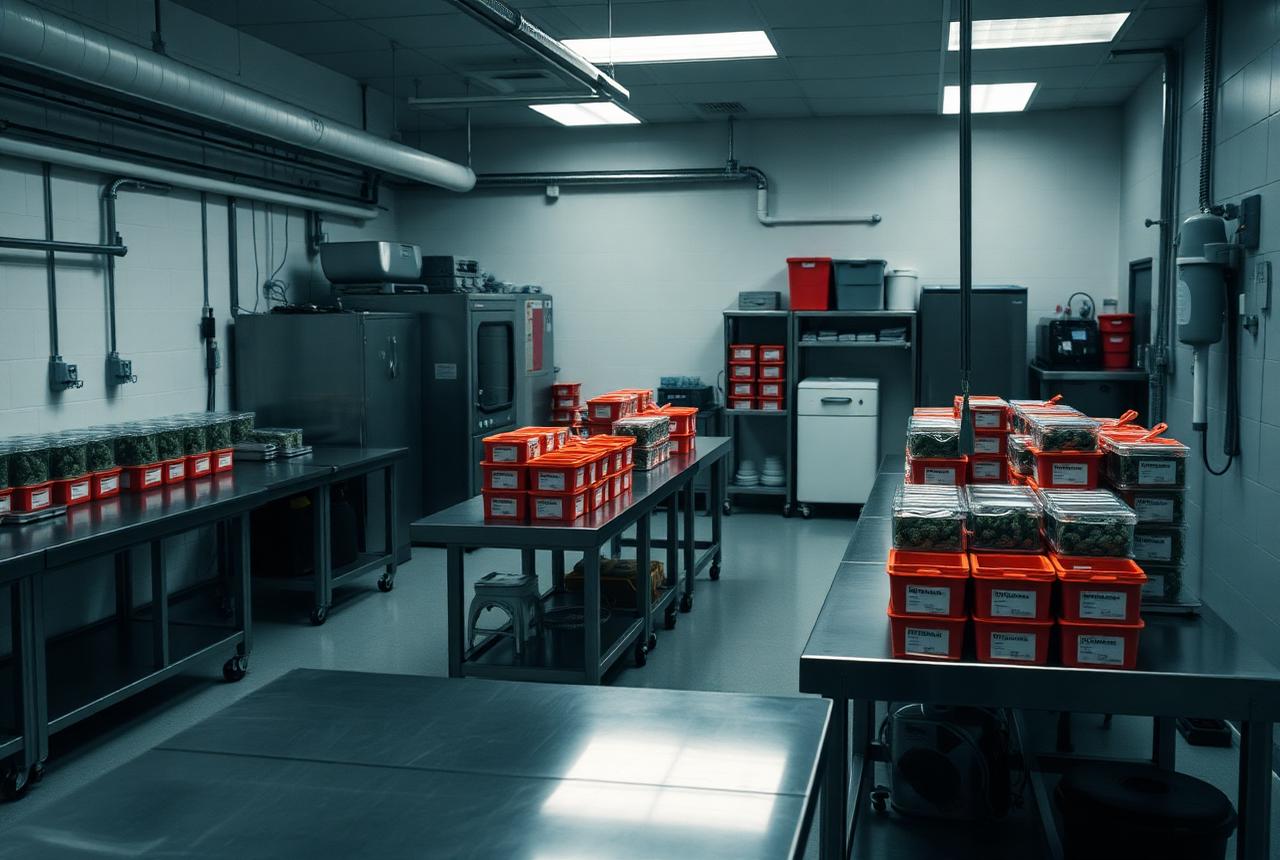
Seed-to-sale tracking is the requirement that a regulated cannabis product be traceable across its entire life. A plant is tagged, packages derived from it carry identifiers, and licensees record the events that happen to them: growth stage changes, harvest, processing, packaging, transfer between licensees, waste, and final retail sale. The regulatory purpose is traceability, so that any unit in the supply chain can be followed backward to its origin and forward to its disposition.
METRC's Role for Oklahoma Licensees
Oklahoma licensees report inventory and product movement through the state's designated electronic seed-to-sale tracking system, which is administered under the rules of the Oklahoma Medical Marijuana Authority. The system is where regulated activity is recorded for compliance purposes: incoming and outgoing transfers, production events, packaging, adjustments, waste and retail sales.
Operational Tracking Versus Accounting
The distinction that causes the most trouble is also the simplest to state. Tracking answers "where is this product and what happened to it." Accounting answers "what did it cost, what is it worth on the balance sheet, and what flowed into cost of goods sold." Those questions overlap in subject matter and diverge completely in method, which is why one system cannot serve both purposes.
Tracking system
Package-level quantities, movement events, transfers, waste and sales recorded for regulatory traceability.
Point-of-sale system
Retail transactions, pricing, discounts, taxes collected and retail on-hand inventory.
Accounting records
Financial balances, inventory value, cost of goods sold, margins and financial statements.
The relationship
Three records describing the same activity from different angles. They should agree, and where they do not, the difference should have a documented explanation.
Why METRC Is Not an Accounting System
A tracking system records quantities and events. It does not apply an inventory costing method, does not allocate production overhead, does not distinguish capitalizable costs from operating expenses, does not produce a trial balance and does not generate financial statements. Treating tracking data as the inventory record leaves an operator with quantities that may be accurate and values that were never calculated. Since cost of goods sold is the mechanism through which cannabis businesses recover cost for federal tax purposes, that gap has consequences well beyond bookkeeping tidiness.
- No inventory valuation under accounting standards
- No overhead allocation or production cost accumulation
- No distinction between capitalized and expensed costs
- No financial statements, trial balance or general ledger
- No tax basis, depreciation or period-end accrual logic
Inventory Reconciliation: The Central Discipline
Reconciliation compares what the tracking system says the business holds and moved, what the point-of-sale system recorded, and what the accounting records show, then explains any difference. Done monthly, it converts three separate data sets into one defensible picture. Skipped, it allows small differences to compound until nobody can say which record is right.
- 01Extract tracking activity and closing package quantities for the period
- 02Extract point-of-sale sales, receiving and on-hand data
- 03Compare both against inventory movement in the general ledger
- 04List every variance with its quantity and value impact
- 05Investigate causes and document the explanation
- 06Post supported adjustments and retain the workpaper with the close
POS Versus METRC Versus Accounting Records
Retail operations feel this most acutely because all three systems are active every day. A sale reduces point-of-sale inventory, should reduce tracking system inventory, and should produce revenue and a cost of goods sold entry in the ledger. When those three do not move together, the cause is usually procedural: a sale voided in one system only, a return handled differently by each, or an item sold from a package that was never properly recorded as received.
Retail-specific handling is covered on dispensary accounting.
Purchases and Receiving
Receiving is where most downstream discrepancies originate. Product physically arrives, is accepted in the tracking system, is entered into the point-of-sale catalogue and is recorded as a payable and an inventory addition in the ledger. Those four events happen at different moments and sometimes are handled by different people. Where the received quantity does not match the manifest, or where the accounting entry uses a different date than the tracking acceptance, a variance is created at the outset.
- Count on arrival and record differences against the manifest immediately
- Accept in the tracking system and enter into accounting on the same basis
- Match the invoice to the received quantity, not to the ordered quantity
- Keep manifests and receiving documents with the period's records
Transfers Between Licensees and Locations
Transfers move product out of one licensee's inventory and into another's. For the accounting records, an outbound transfer is either a sale or an internal movement depending on the relationship between the parties, and for vertically integrated groups that distinction determines whether revenue is recognized or an internal cost transfer is recorded. Getting the accounting treatment of transfers consistent is one of the more valuable things a multi-license operator can standardize.
Adjustments
Adjustments in the tracking system exist to correct quantities. Each one is also an accounting event, because inventory value changed. An adjustment recorded operationally but never reflected in the ledger produces a permanent difference between the two records. The practical rule is that every tracking adjustment should have a reason code, a date and a corresponding accounting entry or a documented explanation of why none is required.
Waste and Destruction
Waste is normal in cultivation and manufacturing and is recorded in the tracking system as required. Financially, waste removes value from inventory, and how that value is treated depends on whether the loss is a normal cost of production or an unusual event. Recording waste with a reason gives management a signal about process problems; absorbing it silently gives them nothing and weakens the support behind ending inventory.
Need Reconciliation Performed Rather Than Explained?
If tracking, point-of-sale and accounting records no longer agree, or nobody currently owns the monthly reconciliation, call to talk it through or schedule a consultation.
Production and Manufacturing Records
Production converts inputs into outputs, and the tracking system records that conversion at the package level. The accounting counterpart is cost accumulation: inputs consumed, labor applied, overhead allocated, and cost attached to the resulting output. Yield loss appears in both records for different reasons, operationally as a quantity difference and financially as cost absorbed by fewer finished units.
Conversion costing is covered under manufacturing accounting, and production accounting for grows under cultivation accounting.
Physical Inventory Counts
Counts are what turn an inventory balance from an assertion into supported evidence. A count schedule, count sheets retained with the period, a documented process for investigating differences before adjusting, and review by someone other than the counter where staffing allows are the elements that make counts useful. Where a count disagrees with both the tracking system and the ledger, the count is usually the starting point for finding out why.
COGS Implications
Cost of goods sold depends on quantities and costs together. Conceptually it reflects beginning inventory plus additions during the period less ending inventory, so an unsupported ending inventory balance produces an unreliable COGS figure and an unreliable gross margin. Because cost of goods sold reduces gross receipts rather than functioning as an ordinary deduction, cannabis operators carry more exposure to this than most businesses. What is properly included is determined under applicable accounting and tax rules for the specific facts and tax period.
Methodology and inventory support are covered on inventory and cost accounting, and the federal deduction framework on 280E tax compliance.
Financial Reporting Implications
Reporting built on unreconciled inventory produces gross margin that swings for reasons nobody can explain, which is corrosive to decision-making. Once reconciliation is routine, margin movement becomes informative: it reflects pricing, mix, purchasing or production performance rather than record-keeping noise. See financial reporting for the reporting package this supports.
Common Reconciliation Problems
- Timing differences where an event is recorded in different periods across systems
- Transfers accepted in the tracking system but never entered in accounting
- Waste and adjustments recorded operationally with no accounting counterpart
- Returns and voids handled differently by the point-of-sale and tracking systems
- Receiving posted against ordered rather than actually received quantities
- Package splits and repackaging that break the link to the original cost
- Sample and promotional product removed from inventory with no record of value
- Manual entry errors that go undetected because nothing compares the systems
- Prior-period differences carried forward and never resolved
Month-End Reconciliation Workflow
- 01Close the operational period and freeze the data pulls
- 02Extract tracking, point-of-sale and general ledger data for the same window
- 03Reconcile receiving to payables and to tracking acceptances
- 04Reconcile sales to tracking sales activity and to recorded revenue
- 05Reconcile production, waste and adjustments to inventory movement
- 06Tie the ending inventory balance to counts and package quantities
- 07Document variances, post supported adjustments, file the workpaper
Documentation
The standard worth holding is that a reviewer who was not present could follow any inventory balance from the financial statements back to source records. In practice that means the reconciliation workpaper, the data extracts it was built from, count sheets, manifests, adjustment explanations and a dated note describing the method are retained together with the period they support.
How Accountants Use Operational Data
An accountant does not use tracking data to produce compliance reports; the operator does that. The accountant uses it as independent corroboration of the quantities underlying inventory and cost of goods sold. When package quantities, point-of-sale activity and ledger movement all point to the same conclusion, the inventory balance is supported. When they do not, the accountant has a specific, investigable question rather than a vague suspicion.
Why Discrepancies Should Be Investigated Rather Than Plugged
A plug makes a reconciliation balance and destroys its value. The difference had a cause, and that cause is almost always a process issue that will recur: a receiving step nobody owns, a return procedure that differs between systems, a package split that loses cost traceability. Investigating the first occurrence fixes the process; plugging it guarantees the second occurrence, with a weaker record to explain it.
Informational Guide Versus Reconciliation Service
This page is the reference. The recurring engagement, where reconciliation is performed monthly, historical periods are cleaned up and workpapers are produced and retained, is described on our METRC reconciliation service page. Operators who need the full accounting function around it should start with medical marijuana accounting or cannabis bookkeeping.
Oklahoma METRC and Seed-to-Sale FAQs
- What is seed-to-sale tracking?
- Seed-to-sale tracking is the practice of recording a cannabis product's movement through every stage of its life, from a plant or an incoming package through production, transfer and final sale or disposal. Each unit or package carries an identifier, and licensees record events against it so that regulators can trace product across the supply chain.
- What is METRC and what does it do in Oklahoma?
- METRC is a state-designated electronic tracking system used to record cannabis inventory and product movement. Oklahoma licensees report product movement through the state's electronic seed-to-sale tracking system, with the specific requirements, reporting deadlines and system rules set by the Oklahoma Medical Marijuana Authority. Because those requirements are periodically revised, current obligations should be confirmed directly with the authority.
- Is METRC an accounting system?
- No. It is an operational compliance and traceability tool. It records quantities and movement, not financial values under accounting rules; it does not produce financial statements, calculate cost of goods sold, or value inventory for accounting or tax purposes. It is a source of operational data an accountant uses, not a replacement for accounting records.
- Why do METRC and accounting records disagree?
- Common causes include timing differences at period boundaries, transfers recorded in one system and not the other, unrecorded waste or adjustments, sales recorded at the point of sale but not reflected in the tracking system, receiving posted at different dates, and simple data entry errors. Most differences have an ordinary explanation, but they only stay explainable if they are found while the source records still exist.
- How often should METRC be reconciled to accounting records?
- Monthly at minimum, aligned to the close, with higher-volume operations often performing lighter checks weekly. The practical argument for frequency is that a variance found within weeks can usually be traced; the same variance found eleven months later usually cannot.
- What is the difference between POS, METRC and accounting records?
- The point-of-sale system records retail transactions and on-hand retail inventory. The tracking system records regulated product movement and package-level quantities. The accounting records carry financial balances, inventory value and cost of goods sold. Each is authoritative for a different purpose, and all three should tell a consistent story about the same underlying activity.
- Should discrepancies just be adjusted to match?
- No. Forcing agreement by plugging a difference removes the signal without addressing the cause, and it leaves inventory balances unsupported. Variances should be investigated, the cause documented, and any adjustment posted with a written explanation retained with the period's workpapers.
- How does seed-to-sale data affect COGS?
- Tracking data supports the quantity side of inventory: what was received, produced, transferred, wasted and sold. Cost of goods sold depends on both quantity and cost, so accurate tracking data underpins the calculation even though the tracking system itself does not compute it. Where quantities are unreliable, the resulting COGS and gross margin figures are unreliable too.
- Who should perform the reconciliation?
- It works best as a defined responsibility rather than a shared assumption. Some operations assign it to an inventory manager with accounting review; others have their accountant perform it as part of the monthly close. What matters is that it is scheduled, documented and reviewed by someone other than the person entering the data where staffing allows.
- Is this page official guidance from a state agency?
- No. This is general educational information prepared by an accounting practice and is not affiliated with, endorsed by or issued by any state agency or software provider. Confirm current requirements with the Oklahoma Medical Marijuana Authority.
Related Services
METRC Reconciliation
Monthly reconciliation between tracking, point-of-sale and accounting records.
Read moreInventory and Cost Accounting
Inventory support, costing methodology and COGS.
Read moreDispensary Accounting
Retail accounting, receiving and daily reconciliation procedures.
Read moreCultivation Accounting
Production cost accounting and inventory for grow operations.
Read moreManufacturing Accounting
Conversion costing, WIP and yield for processors.
Read moreMedical Marijuana Accounting
The full accounting function for licensed Oklahoma operators.
Read moreGet Your Tracking and Accounting Records Back in Agreement
Call to talk through your current reconciliation process and where the differences are appearing, or schedule a consultation to review your records.