Oklahoma Cannabis Processors
Accounting & Financial Guidance for Oklahoma Cannabis Processors
Processing is a conversion business. Cannabis inputs enter production, move through stages, lose some volume along the way, and emerge as processed product that has to be valued, packaged and sold. This guide covers the financial mechanics of that conversion for Oklahoma processors: input tracking, work in process, yield and loss, processing cost accounting, COGS, cash flow and tax records.
- Inputs
- Traced through conversion
- Batches
- Costed individually
- Yield
- Measured, not assumed
- COGS
- Built from records
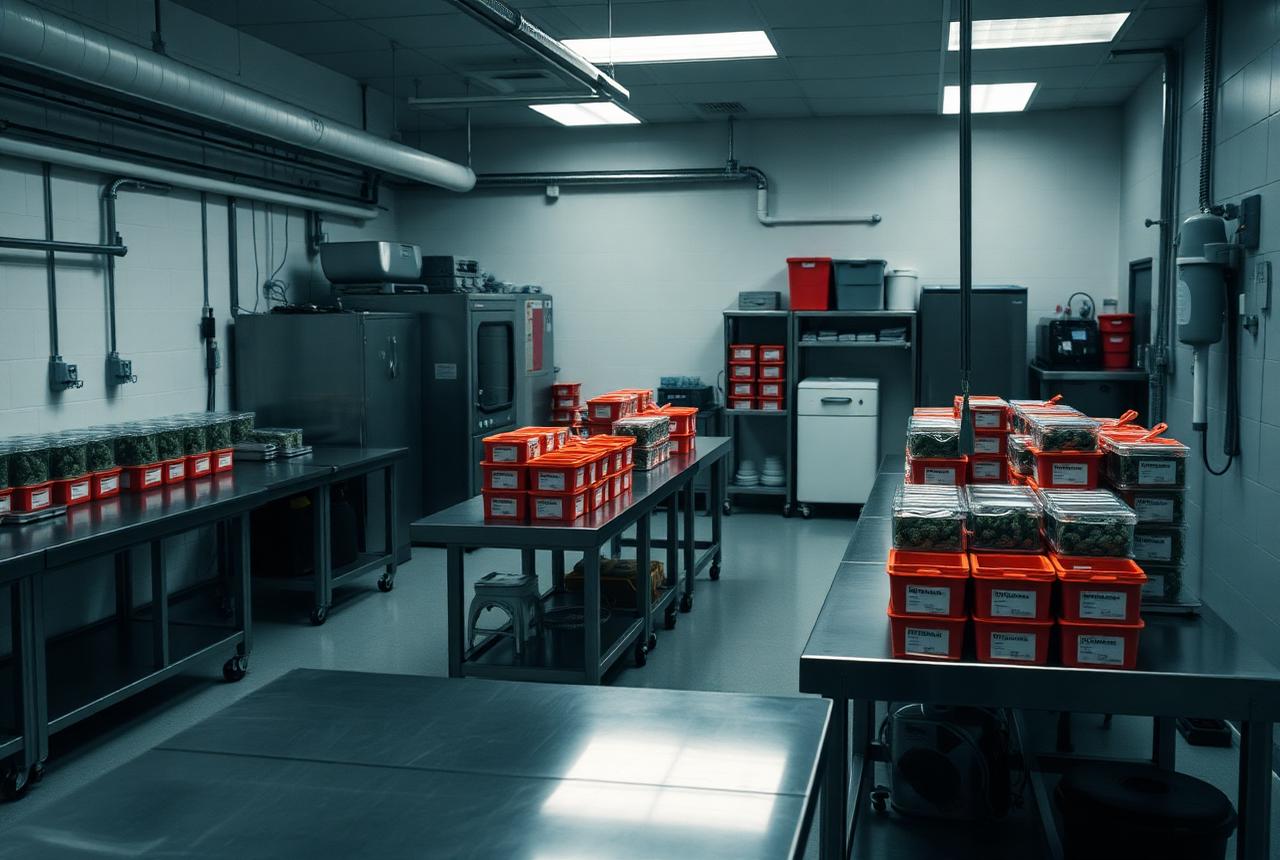
Financial Challenges Facing Cannabis Processors
A processor sits between cultivation and the finished-product market, and its economics reflect that position. Input material is acquired or transferred in at a cost the processor may not fully control. Conversion consumes labor, equipment time and utilities. Some volume is lost in the process. What comes out is then sold into a market where price is set by competition rather than by what the run happened to cost.
The financial pressure point is the gap between those two ends. When input cost, conversion cost and yield are not measured together, a processor can run at volume for months without knowing whether the work is adding margin. Cash compounds the problem, because inputs and labor are paid long before processed product is sold and collected.
- Input material cost that moves with the wholesale market
- Conversion labor paid during production rather than at sale
- Equipment and facility costs that continue between production runs
- Yield loss that raises the effective cost of every saleable unit
- Inventory held as inputs, in-process material and finished product at once
- Packaging and supply purchases made ahead of the runs that consume them
- Testing, sampling and quality activity tied to specific batches where applicable
- Pricing pressure on processed product that makes cost visibility essential
- Working capital consumed between input purchase and collection
- Records that must satisfy both operational and tax reporting needs
Accounting for Cannabis Processing Operations
Processing accounting is built around conversion events rather than around invoices. The central question is not simply what was spent this month; it is what material entered production, what happened to it, and what the resulting product should be carried at. Answering that requires the accounting to sit close to the production records rather than at arm's length from them.
Practically, that means input receipts recorded with cost, material issues recorded against batches, conversion costs accumulated while product is in process, output recorded when a batch finishes, and cost released to cost of goods sold when product sells or transfers out. The commercial version of that work for Oklahoma operators is our cannabis manufacturing and processor accounting service. This page explains the industry context behind it.
Tracking Cannabis Inputs Through Production
Everything downstream depends on knowing what went in. Input tracking connects a quantity of material, at a known cost, to the batch that consumed it. Processors working from purchase totals alone can produce a company-level margin but cannot explain why a particular product line performs the way it does.
- 01Input material received or transferred in, recorded with quantity and cost
- 02Material issued to a specific production batch
- 03Conversion performed; labor and production costs accumulate against the batch
- 04Output quantities recorded, along with loss and waste
- 05Processed product moved to finished inventory or on to packaging
- 06Cost released to cost of goods sold at sale or transfer
Processes differ widely between operations, and this page does not attempt to describe how any particular conversion should be performed. The accounting requirement is consistent regardless of method: each step should leave a record the books can be built on.
Raw Materials and Processing Inventory
Raw material inventory for a processor covers the cannabis inputs awaiting production plus the non-cannabis materials that production will consume. Both need to be carried at cost and relieved when used, or the resulting product cost will be wrong in opposite directions at different times of the year.
- Cannabis input material purchased or transferred in from cultivation
- Ingredients, solvents and other consumable production inputs
- Packaging components held for processed product
- Production supplies not incorporated into the final product
- Receiving records that capture quantity and cost at the point of receipt
- Storage locations and stage identification within the inventory subledger
Work-in-Process Accounting
Work in process is material that has entered production but is not yet finished, saleable product. For a processor that can mean material between conversion stages, bulk output awaiting packaging, or product awaiting testing where that applies. It is real value, and it belongs on the balance sheet rather than buried in the month's expenses.
Processors who skip work in process usually notice the effect before they identify the cause: cost of goods sold spikes in heavy production months and collapses in light ones, gross margin becomes unusable for pricing, and year-end requires a large, poorly documented adjustment. Carrying work in process keeps cost attached to the product that created it.
Finished Product Accounting
When a batch completes, the accumulated cost of the material, labor and production inputs consumed becomes the carrying value of the finished product. That value then determines reported inventory on the balance sheet and cost of goods sold when the product moves.
- Output quantities recorded at batch completion
- Accumulated batch cost transferred from work in process to finished product
- Per-unit valuation applied on a documented, consistent basis
- Packaged versus bulk product distinguished where the operation holds both
- Finished product reconciled to counts and to seed-to-sale quantities
- Cost released to COGS on sale or transfer, not before
Processing Cost Accounting
Processing cost accounting assembles the costs a conversion consumed and applies them to what the conversion produced. The categories are familiar; the discipline is in capturing them at the batch level instead of as monthly totals.
Input material
Cannabis material and other inputs consumed by the batch, relieved from inventory at recorded cost.
Conversion labor
Wages and related costs for staff performing processing work, coded to production rather than blended with administration.
Production supplies
Consumables used during conversion that are not part of the finished product.
Equipment and facility
Depreciation, maintenance and facility costs associated with production areas and machinery, applied on a documented basis.
Ongoing execution of this - and cleanup where prior periods were handled inconsistently - is covered by manufacturing accounting services alongside cannabis bookkeeping.
Not sure what your conversions actually cost?
We can review how inputs, labor and yield are currently recorded, and what it would take to produce reliable batch costing for your processing operation.
Production Labor
Labor in a processing operation is applied unevenly: some conversions are labor-heavy, some are equipment-heavy, and packaging often takes more hands than the conversion itself. A single blended payroll figure hides all of that.
- Processing staff performing conversion work
- Packaging and labeling labor for processed product
- Supervision, quality and compliance-support roles on the production floor
- Administrative and sales labor kept separate from production
- Payroll coded by function so labor can be analyzed by activity
- Time records detailed enough to support batch-level analysis where used
Processing and functional coding are handled through cannabis payroll services.
Packaging Costs
For processors that package their own output, packaging is often the second largest variable cost after input material. Container choice, label revisions, fill format and minimum order quantities all move per-unit economics, and packaging bought in bulk distorts monthly results unless it is carried as inventory and consumed against runs.
- Primary containers appropriate to the processed product
- Labels and label revisions
- Secondary packaging and shipping materials
- Packaging labor, which varies substantially by format
- Packaging waste, misprints and rejected components
- Cash committed to packaging inventory ahead of production
Batch and Production Economics
Batch size and production scheduling change unit cost even when nothing else does. Setup, changeover, cleaning and quality steps are largely fixed per run, so spreading them across a small batch produces a very different per-unit result than spreading them across a large one.
- Fixed per-run effort spread across the units a batch produced
- Changeover time between products or formats
- Equipment utilization across the production schedule
- Rework and its effect on the cost of the affected batch
- Idle capacity during periods of light production
- Batch-level records that make these comparisons possible
We do not publish batch cost benchmarks for cannabis processing. Meaningful figures depend entirely on a specific operation's process, equipment, inputs and volume; the value comes from measuring your own consistently over time.
Yield and Production Loss
Yield is the defining economic variable in processing. The relationship between input quantity and saleable output determines how much cost each finished unit has to absorb. A yield change of any size moves unit cost immediately, whether or not purchase prices or wages changed at all.
- 01Input quantity issued to the batch at recorded cost
- 02Conversion performed
- 03Saleable output quantity recorded
- 04Loss during conversion recorded
- 05Yield calculated from measured input and output
- 06Per-unit cost recalculated on the units actually produced
Waste and Inventory Adjustments
Waste, destruction and count adjustments are ordinary events in a processing operation, and they belong in the accounting as well as the operational record. When they are only recorded on one side, inventory balances drift and every later reconciliation inherits the difference.
- Waste and destruction events documented in operational records
- Corresponding inventory relief recorded in the accounting system
- Rejected or non-conforming material handled consistently
- Count differences investigated before adjustment where practical
- Adjustment entries supported by documentation rather than plugged
- Recurring adjustment patterns treated as a process signal, not a rounding item
Seed-to-Sale Reconciliation for Processors
Processors generate more conversion and transfer activity than most other license types, which makes the gap between the regulated record and the accounting record easier to open and harder to close. Regular reconciliation keeps that gap small enough to explain.
- Receipts and transfers in from cultivation or third parties
- Conversions recorded in the regulated system and in inventory
- Waste and destruction events on both sides
- Physical counts by stage on a defined schedule
- Transfers out and sales matched to accounting entries
- Differences researched and documented while records are current
Recurring reconciliation and historical cleanup are handled through METRC reconciliation services.
Processor COGS Accounting
Cost of goods sold for a processor is the accumulated cost of the specific product that was sold, not a percentage applied to revenue. It depends on input costs recorded accurately, conversion costs captured against batches, yield and loss reflected, and inventory reconciled to physical reality.
When those inputs are sound, gross margin becomes a usable management number and the records supporting cost of goods sold are documented for tax purposes. When they are not, both the reporting and the tax position rest on estimates. Method and documentation are addressed in inventory and cost accounting and applied in manufacturing accounting.
Cash Flow for Cannabis Processing Businesses
Processing commits cash early. Input material is paid for before conversion, labor is paid during it, packaging is ordered ahead of runs, and processed product then waits for a buyer and, in wholesale relationships, for payment after that. Profit can be accumulating in inventory while the operating account tightens.
Planning around that cycle - required inventory levels, payment terms on both sides, production scheduling, and the timing of equipment purchases - is the substance of cash flow planning, with longer-horizon modeling available through fractional CFO support.
Equipment and Facility Costs
Processing is equipment-intensive, and equipment decisions carry through the financial statements for years. A purchase consumes cash now, sits on the balance sheet, and feeds production cost through depreciation and maintenance for its useful life.
- Processing and conversion equipment
- Packaging and filling equipment
- Facility buildout and improvements for production areas
- Utility, ventilation and safety infrastructure supporting processing
- Maintenance, servicing and spare parts
- Lease or financing structures and their cash flow effects
Financial Reporting for Cannabis Processors
Useful reporting for a processor connects financial results back to production. The standard statements answer whether the company made money; the production detail answers where.
- Income statement with cost of goods sold built from actual production records
- Balance sheet showing inventory by stage: inputs, work in process, finished product
- Cash flow visibility that accounts for inventory investment
- Production cost analysis by batch or product line
- Yield and loss trends alongside financial results
- Product-line margin rather than a single blended margin
- Budget versus actual comparison for production and operating costs
Monthly reporting packages are produced through our financial reporting service.
Cannabis Processors and IRC Section 280E
Federal cannabis scheduling and the application of IRC Section 280E are evolving areas that require analysis based on current law, the specific business, the products involved and the applicable tax period. A position that fits one operation and one year does not automatically transfer to another.
What holds steady is the value of documentation. Accurate input records, batch-level cost capture, recorded yield and waste, reconciled inventory and clean financial statements are the foundation any analysis works from. We do not recommend arbitrary reclassification of expenses; we build the records and analyze the position on them. Engagement-level work is handled in 280E tax compliance.
Tax Preparation for Cannabis Processors
Year-end goes the way the year went. Processors that maintained inventory, captured conversion costs and reconciled monthly arrive at filing season with a return that can be prepared and supported. Processors that did not spend the first weeks of the engagement rebuilding the year before anything can be filed.
Federal and Oklahoma return preparation is handled through cannabis tax preparation, working from the same reconciled records used for monthly reporting.
Multi-Product Processing Operations
Most processors do not make a single item. Different products consume different inputs, run at different yields, take different amounts of labor and use different packaging. Averaging across them produces a company margin that describes none of them.
- Costs captured at the batch and product-line level rather than in aggregate
- Yield tracked separately by product where processes differ
- Packaging cost per unit by format
- Labor applied by product line where records support it
- Product-line margin reporting used in production scheduling decisions
- Low-margin products identified before they consume capacity for another year
Deciding what to do with that information - pricing, mix, discontinuation, capacity - is the focus of business advisory work.
Vertically Integrated Cannabis Processors
Processors that also cultivate, manufacture finished products, or operate retail need cost and inventory to carry cleanly across every stage. Internal transfers are where that usually breaks: material leaves one set of books at one value and arrives in another at a different one, and segment margin stops meaning anything.
- Cultivation cost carried into transferred input material - cultivation accounting
- Conversion and packaging cost applied to processed output - manufacturing accounting
- Retail-level sales, discounts and shrink - dispensary accounting
- Consistent valuation at every transfer point - inventory and cost accounting
- Transfers reconciled in the regulated system and the ledger - METRC reconciliation
Common Accounting Problems for Cannabis Processors
These are the issues processors most often describe when accounting stops keeping up with the operation. They are illustrative examples, not client statements.
“We can't tell what a conversion costs.”
Input, labor and packaging costs are recorded as period expenses and never assembled at the batch level.
“Our yield numbers don't tie to the books.”
Production records show one thing and inventory values show another, with no bridge between them.
“Work in process isn't recorded at all.”
Everything is either raw material or finished product, so cost lands in the wrong period.
“Inventory adjustments keep appearing.”
Recurring unexplained adjustments signal a process gap rather than a counting error.
“We don't know which products are worth running.”
Margin exists only at the company level, so scheduling decisions are made without economics.
“Seed-to-sale and accounting disagree.”
Conversions and transfers recorded in one system never made it into the other.
“Cash is always tight during heavy production.”
Inputs, labor and packaging are funded weeks before the resulting product is collected on.
“Last year's records can't be relied on.”
Prior-period inventory and production records need to be rebuilt before current reporting means anything.
Financial Services for Oklahoma Cannabis Processors
Most processing engagements begin with one concrete problem - batch costing, an inventory reconciliation, a cleanup, or a filing deadline - and grow from there. Each service below works from the same underlying records, which is what keeps reporting, reconciliation and the tax position consistent.
Core Accounting and Inventory
Manufacturing Accounting
Commercial cannabis processor and manufacturing accounting: batch costing, WIP and COGS.
Read moreInventory & Cost Accounting
Inventory valuation, cost capture and COGS methodology for conversion operations.
Read moreCannabis Bookkeeping
Monthly close and reconciliation built around production activity.
Read moreMETRC Reconciliation
Reconciling conversions, transfers and waste to inventory and the ledger.
Read moreCannabis Payroll
Payroll with functional coding for processing and packaging teams.
Read moreCash Flow Planning
Working-capital planning around input purchases and production cycles.
Read moreTax, Reporting and Advisory
280E Tax Compliance
280E analysis grounded in documented inventory and production records.
Read moreCannabis Tax Preparation
Federal and Oklahoma return preparation for processing businesses.
Read moreFractional CFO
Forecasting, budgeting and management reporting as throughput grows.
Read moreBusiness Advisory
Margin, mix and profitability advisory for processing operators.
Read moreFinancial Reporting
Monthly reporting with inventory, COGS and product-line margin detail.
Read moreCannabis Manufacturers
Industry guidance for operators producing finished cannabis products.
Read moreOklahoma Cannabis Processor FAQs
- What does accounting for a cannabis processing business involve?
- Processing accounting follows cannabis inputs through conversion into processed product. It covers how input material is recorded and valued, how production costs attach to batches, how work in process is carried between stages, how finished product is valued, and how cost of goods sold is recognized when that product is sold or transferred. It sits on top of ordinary bookkeeping rather than replacing it.
- How should a processor track material through production?
- Each conversion should be traceable: what quantity of input was issued, what batch it went into, what came out, and what was lost. Those events already exist in operational and seed-to-sale records. Processing accounting mirrors them in dollars so that inventory values and cost of goods sold reflect what physically happened.
- What counts as work in process for a processor?
- Material that has entered production but is not yet a finished, saleable product. Depending on the operation that can include material between stages, product awaiting testing where applicable, or bulk output waiting to be packaged. Carrying work in process keeps production spending attached to the product it created instead of to the month it was paid.
- How is yield loss handled in processing accounting?
- Yield loss is a normal part of conversion, and it does not disappear from the accounting. The cost of input material that did not become saleable output remains in the cost of the output that did, which is why per-unit cost rises when yield falls. Recording loss and waste consistently is what makes that relationship visible rather than mysterious.
- Why do our processing costs look different every month?
- Usually because production spending is recorded as it is paid rather than carried with the product, or because inventory records are incomplete. Input purchases, packaging orders and labor rarely line up with the month the resulting product sells. Once inventory and work in process are maintained, monthly results start reflecting activity instead of payment timing.
- How do processors reconcile seed-to-sale data with the books?
- By comparing the regulated record of receipts, conversions, transfers and waste against the inventory subledger and the accounting entries on a regular schedule. Differences are then researched while the supporting documentation still exists. Left alone, small discrepancies accumulate into a balance nobody can explain.
- Does IRC Section 280E apply differently to processors?
- Federal cannabis scheduling and the application of IRC Section 280E are evolving areas that require analysis based on current law, the specific business, the products involved and the applicable tax period. Rather than relying on general statements, the practical priority for a processor is accurate inventory, documented production costs and supportable cost of goods sold, so that whatever position applies can be substantiated.
- How do processors that make several products handle costing?
- Multi-product operations need costs attached to the batches and product lines that consumed them, not spread evenly across everything produced. That means recording material issues, labor and packaging at the batch level where possible, so that product-line margin reflects real differences in inputs, yield and packaging rather than an average.
- What financial reporting is useful for a processing business?
- An income statement with meaningful cost of goods sold, a balance sheet showing inventory by stage, cash flow visibility, production cost analysis, product-line margin, and budget versus actual comparisons. The combination shows both whether the company made money and where in the process it was made or lost.
- Can you clean up processing records from prior periods?
- Yes. Historical cleanup typically involves rebuilding inventory activity, reconstructing production and conversion records, correcting how costs were recorded, reconciling to counts and seed-to-sale data, and then restating the affected periods so the current books have a defensible starting point.
Related Industries and Guides
Discuss Your Operation With a Cannabis Accounting Specialist
Call to talk through your license types, current records, and reporting needs, or schedule a consultation at a time that works for your team.